INSANE CONSEQUENCES: LETTER TO THE SACRAMENTO BEE

June 25, 2017

Dear Editor,

Darrell Steinberg and Dr. Carter correctly note that 20% of the almost $2 billion raised by the Mental Health Services Act ($400 million) is already required to go to Prevention and Early Intervention (PEI) services. As Darrell Steinberg said when lobbying for that program, “We can’t prevent certain mental illnesses, such as schizophrenia and bipolar disorder, but we can prevent them from becoming severe and disabling.” That’s what PEI funds were supposed to do.

As the state auditor, two little Hoover Commission reports, the Associated Press and Mental Illness Policy Org have all revealed, that didn’t happen. Programs to improve grades, eliminate divorce, improve job prospects, reduce bullying, gain comfort with sexual identity, and teach art are all being wrapped by counties in a mental health narrative so PEI funds can be diverted to them. So rather than create yet another tax-payer fund “that gives counties financial incentive to infuse far more resources into early intervention for psychosis and serious mood disorders,” why don’t we first ensure that the original $400 million already allocated to that purpose achieves it?

DJ Jaffe

Click on this link to see Insane Consequences on Amazon:
Author, Insane Consequences: How the Mental Health Industry Fails the Mentally Ill

This well-researched and highly critical examination of the state of our mental health system by the industry's most relentless critic presents a new and controversial explanation as to why--in spite of spending $147 billion annually--140,000 seriously mentally ill are homeless, 390,000 are incarcerated, and even educated, tenacious, and caring people can't get treatment for their mentally ill loved ones.  
 

A LETTER TO MY SON by Laurie Lamsus Vogel

I finally got my parents' family therapy packet from my son's residential treatment facility. (Yep, we have homework and I still love this place.) My first assignment was his biography, then yesterday, I had to read him a letter I wrote about what his life might have been like if he didn't go into residential treatment. We've talked about this often because he's been gone 6 years. His entire adolescent years -- eleven to seventeen. Here's the letter I wrote to him. It wasn't in detail because I was at the ER with a possible broken hand when I wrote it. 

To My Dearest William,

I know you're tired of being in treatment and want to come home. We want you home, too. You are so close to being ready and we look forward to the day you come home for good. I want you to know that being in treatment has saved you from a terrible future. 

Before you went to residential, you had many unsafe behaviors which were putting you in danger. If you'd continued to run away, and had succeeded, you'd likely be living on the streets with no love or support. You wouldn't have food or water or a warm bed to sleep in. You wouldn't be getting the treatment and medication you need. The likelihood that you'd start self-medicating with alcohol and drugs is high. Then, the people you'd associate with could be bad people and either hurt you, or worse. The aggressive behavior would probably come back and you'd most likely hurt someone and possibly end up in jail. Most inmates are mentally ill and didn't get the treatment they needed. Most of them keep committing crimes and are in and out of jail. Also, if you were to hurt someone, I think it would make you sad because you have a good heart and don't like seeing people hurt. 

You have a bright future ahead and I know, when you graduate the program and come home, you'll be ready to be a productive member of society. I'm so proud of how far you've come and I love you more than words can say. 

Love, Mom

William

William

HAPPENING NOW: UPDATE ON SHAYLON By Laural Fawcett

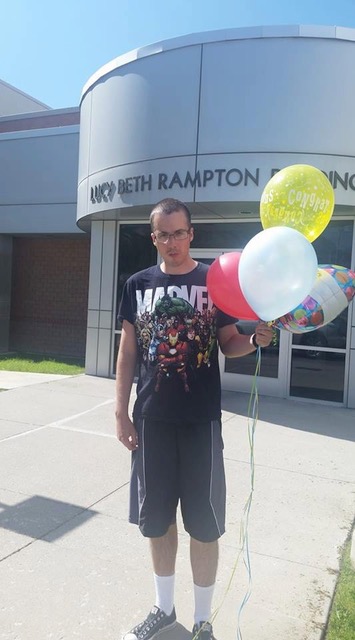
Here is my son wandering on the street in San Francisco followed by an old friend from junior high school who is trying to help me get law enforcement to arrive, and the mental health crisis team to get him to medical treatment.

They'll keep him for a brief time and then dump him on the street again before providing complete care. He has a medical condition and is in complete delusional psychosis. I'm trying to get him the treatment he deserves.

People look at the homeless as if this is normal or a lifestyle choice. It's time to wake up and stop believing the lies that are causing neglect and death of disabled persons and the diversion of funds. The mental health care system is failing to provide services that it's funded to provide. Instead, It burdens law enforcement, first responder, and the criminal justice system with the costs. It uses excuses and hides behind HIPPA and "civil rights" and leaves many to suffer on the streets and in jail.

My son has a right to treatment. I'll continue to shout to the rafters until everyone stops turning a blind eye. The homeless population is primarily made up of disabled persons like my son. Many have families desperate to care for them. Those who don't have family support are doomed in this system. We treat dogs better.

Shaylon on the street

Shaylon on the street

From the oldest

HEART TO HEART by Nikki Landis

It seems to hit me in waves that my life will never be as I imagined. That this is my reality. That so many things I dreamed of will never happen.

I know I'm grieving but does it ever get better? Have any of you settled in to your new reality and have the waves of sorrow passed?

I know I have so much to be thankful for, and I am. My family's been blessed beyond measure in so many ways. I go day to day relatively happy. And then it will hit again and I just want to cry. I don't always get to because there's a little face that needs to be kissed or a little behind that needs to be wiped and I don't want them to see me so sad. But sometimes I just need to cry.

I am such a fighter and that's not always a good thing. I've accomplished so many things that were supposedly impossible, and because that's my nature it makes this harder. I seem to always be looking for ways to figure everything out so we can have the life I envisioned, even when it's not something I should be fighting for anymore. 

I am fighting bitterness. I want to stay thankful and happy and not get ripped up inside by things I should let go. 

Has anyone else beat this? How do you let go of dreams without hating the person with serious mental illness who has stopped those dreams? Or without hating the system that makes it so hard to get better and live life again?

Nikki and her husband, Kevin, who has a serious mental illness

Nikki and her husband, Kevin, who has a serious mental illness

WELCOME HOME MITCHEL! by Sherry Hunter

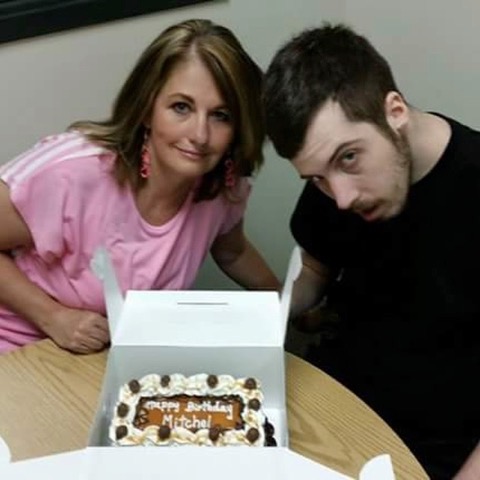
June 20, 2017 - We waited five long years for this day! Welcome home Mitchel! We love you. Never give up hope, no matter what.  

June 1, 2015 - Sherry and Mitchel 

June 1, 2015 - Sherry and Mitchel 

See these other posts by Sherry Hunter on this blog:
Acceptance - October 19, 2016
Anyone Want to Tell Me Why? - November 30, 2016
My son's Life - A Video - March 28, 2017

From the oldest

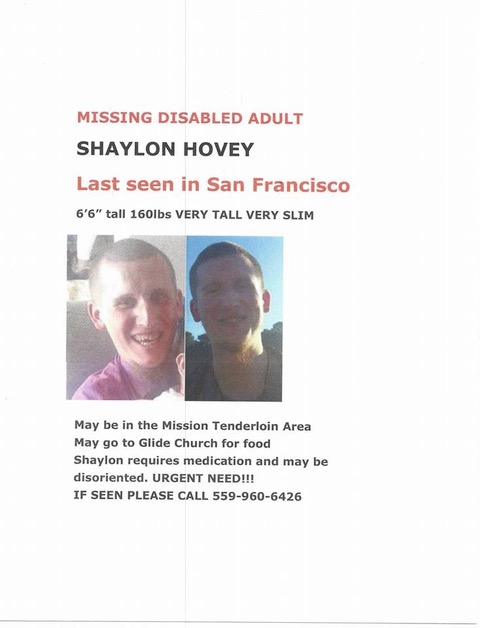
HAPPENING NOW: MY SON'S MISSING IN SF by Laural Fawcett

6/19
I want to show you, that even though I've had terrible news and once again my son's been released from jail to the streets of San Francisco and it rips my heart to the core, I'm going to dry my tears away and simply do the next logical thing. I'm trying to get him into a facility through a new friend I've made. It's a residential facility in Stockton.

There are good people in the system who will listen and work with us, we must educate and coach and endure and reverse engineer or it will never change. My son is not an animal. He's lost on the streets. Maybe he'll call me if I'm lucky. I will be strong but not silent.

Laural

Laural

6/20
Update on my missing son. I'm hanging out with good friends today while I do employment related errands to get my EMT career going. Ironically, my friend's father had an older brother like my son. He was murdered some years ago while in psychosis and on the streets. The family, much like mine, was desperate to provide care.

But we must focus on life. We must fight for justice. I'm working on getting paperwork in order from San Francisco county jail so, if found, I can get my son to the Ever Well residential facility in Stockton, thanks to manager Paul Cumming. I need help from San Francisco area friends to locate my son. 

Info about my son: He's very tall - 6 foot 6. His name is Shaylon Hovey,  pronounced Shaelen. He has big, crystal blue eyes and may be in the SF Tenderloin/Mission area.

Shaylon loves food. So that's a good bribe or conversation starter (haha). He's stated to his public defender that he wants to go into residential treatment. He's had a Haldol shot recently and needs another shot July 6. I have a power of attorney for his health care and legal and financial. So I, Laural Fawcett, hereby give permission to all advocate friends associated with Facebook groups such as CCA to make personal contact with my son, Shaylon Hovey, in order to assist him in getting medical treatment and care for his disability. He has a diagnosis of Paranoid Schizophrenia and co-occuring substance abuse disorder.

Thank you, friends. Your support in thought, heart, and deed is priceless. If seen, please call 559-960-6426.

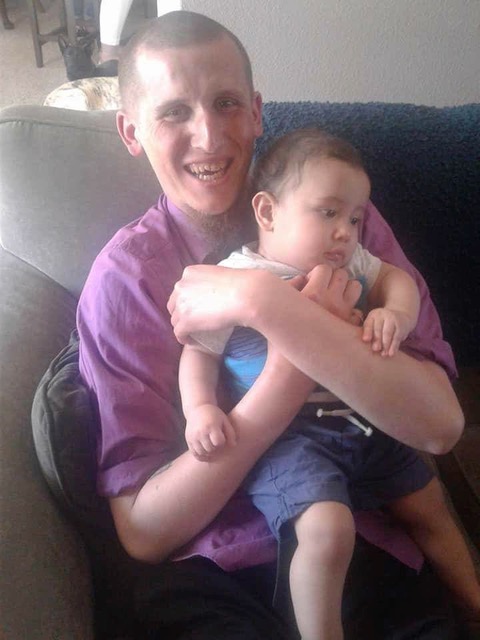
Shaylon and Laural

Shaylon and Laural

BEFORE - SCENES FROM THE TRENCHES by Dede Ranahan

This is the preface to my book,  Sooner Than Tomorrow - A Mother's Diary. I'm going to post diary entries in two-week segments. To receive notice in your email inbox when new book posts are available, subscribe to my new blog, My Diary.  Click on My Diary in the navigation bar and enter your email address in the sign up box on the right.


BEFORE - SCENES FROM THE TRENCHES

Empty Shoes

Empty Shoes

How do you react when your 25-year-old son, during what is later seen as his first acute bipolar episode, kidnaps his teenage sister, drives her to a hospital, and convinces the emergency room staff to admit her because “she’s sick and my parents aren’t taking care of her”?

How do you compute when you arrive at the hospital to rescue your daughter — who has a cold — and you find her hysterical and strapped into a hospital bed?  You ask your son, who is staring straight ahead with empty eyes, “Why did you bring your sister here?”  With logic that reflects his internal confusion, he answers, “Because I knew I needed help.”

What recourse do you have when your son’s health care providers can’t agree on a diagnosis and decide to do nothing?

Whom do you rail against when your son goes through an eight week protocol at Stanford in a blind experiment for bipolar disorder, is seen for the last time with no follow-up appointment scheduled, and is given a slightly altered dosage of his medication?  And, within 24 hours, he’s involuntarily admitted (5150d) to San Mateo County Hospital in a state of acute bipolar psychosis.

Should you be distraught or relieved when your adult child admits himself to the emergency room of San Francisco General because “voices are telling me to kill myself”?

Where do you turn when, as the parent of an adult child with severe mental illness, you’re told, “You have no right to any information”?

How do you reconcile the fact that the state of New York, at New York taxpayers’ expense, hospitalized your son for six months in Bellevue Hospital, and paid his return airfare to the West Coast when he was stable?

In California, on the other hand, where involuntary hospitalizations last 72 hours, on eight separate occasions, judges asked your son, “Are you a danger to yourself or others?” And when he answered “no,” eight different judges released him with no money, no medication, and no place to go.

Do you dare find hope again when, a year after leaving Bellevue Hospital, your son has a job, earns an impressive score on the Graduate Record Exam, and receives a fellowship in creative writing at San Diego State University?

Do you give up your new found hope when, after three months at San Diego State, the attempt to teach, write, work, and conceal his mental disability is too much?  Stress causes a Grand Mal seizure and your son spins out of control.  He’s sicker now than when he was admitted to Bellevue Hospital. 

How do you get a fair hearing when, after five years and eleven involuntary hospitalizations, five of which were within one year, Social Security tells you, “Your son is denied SSDI benefits because he does not meet the criteria for severe and persistent mental illness”?

What do you do when your mentally ill family member doesn't have health insurance and can’t get a job to access group health insurance?

What do you decide when a California police officer asks, “Do you want me to press auto theft charges against your son for taking your car?  Answer ‘yes’ I send him to prison.  Answer ‘no’ I release him to the street.  There’s no time to consult a lawyer.  Tell me now.”

What do you say at three o’clock in the morning, when someone you’ve never met — a friend of your son’s — calls you in California from London and yells, “Get your son out of my house!  He’s destroying my property”?

What do you say at three o’clock the next morning when that same person calls back sobbing, feeling so guilty for having his friend forcibly admitted to a London psychiatric hospital?  Then he describes the scene as his friend, calm at first, fought ferociously as he was bound into a straitjacket and thrown into a padded cell. 

How do you cope when your mentally ill adult child is missing, and your daughter calls you in tears because a newspaper article describes a John Doe who killed himself on the railroad tracks in the vicinity where your son was last seen, and John Doe fits your son’s description? 

How do you process the hours waiting for the coroner’s report to confirm or deny that John Doe is or is not your son?  And in those hours, you pray he is not your son and then pray he is your son, to end his pain and to end yours.  And when the coroner says, “John Doe is not your son,” you take a deep breath but then think to yourself, John Doe is someone’s son. 

How do you forget the wracked faces and bodies you’ve seen while visiting your son in locked wards of prisons and mental hospitals?  What choices do you have when you realize you cannot, you will not erase from your memory their anguish and despair?

How do you live with your disappointment when, after searching streets for days, you can't find your son and you give up and go home without him?

How do you advocate when the world sees a bum, and you see the little boy you carried in your womb, nursed at your breast, laughed and played with, and knew in your heart was the world’s greatest child?  And you know somewhere, trapped inside his brain, the world’s greatest child is lost and trying to be found.

Dede Ranahan 2001

COMING UP TOMORROW ON MY NEW BLOG, MY DIARY - JUNE 15, 2017:  SUMMER: JUNE 15,  2013 - JUNE 29, 2013


Copyright Dede Ranahan 2017.  All Rights Reserved.

From the oldest