I'm handsome, ay?
Hope you have a good weekend everybody!
Your Custom Text Here

Photo Credit: Jim Moon
I'm handsome, ay?
Hope you have a good weekend everybody!
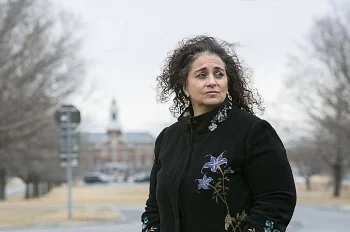
Tama
That prison time you did. The mental health treatment you needed and never got:
It did a number on me, son. That time made all my other time seem like it was standing still. What happened to you, believe me, happened to me. I would wake up sweating, I would wake up screaming, or crying after a dream. I could barely think of anything but you. You stuck in the solitary cell with your illness and no treatment. Would I get a call that so many mothers had gotten?
I had the most important things happen in my life and could not be present for them: the birth of my grandson, my nephew's death, your grandfather's death, your aunt's death. Nothing could I do, nothing could I say that would put me squarely in the place where I was supposed to be — because I was there inside with you.
In 2006, I began my very first weight loss journey — it was time to take care of me. I wasn’t young, but society didn’t call me old. It was the perfect time, and I lost close to 200 pounds with a lot of suffering and work on myself. I looked amazing, felt amazing. You were holding your own in our community, but deep inside I knew it couldn’t last forever. Your mental illness was bigger than both of us. But in order to take care of me, I had to try to relax about you. I had to stop checking on you so much. I had to stop worrying about you so much. And so I did. I let go as my friends would say, and 'let god'.
The year 2013 came in like a warrior. It came with news that you were beating people up for no reason, that you were hanging out in places you had no business being, and doing things that were sure to get you in trouble. I gave you an ultimatum. Stop these things, and get back to mental health for treatment or you cannot come home. And you chose homelessness.
I watched as your illness grew worse on the street. Your paranoia, your delusions, they were deep and dark. I prayed ceaselessly for you but nothing changed. When the cops told me they had arrested you for attacking a man who was delivering food, I knew that not only had I failed you, mental health had failed you. They told me they could not force you to accept the insipid help they were offering.
I asked about a certain law that said if you are too sick to recognize your illness, a judge can make you accept treatment (Kendra's Law in New York State), but they said, “We have no doctor willing to go to court,” and “Just let him go to jail, he’ll get more help there than in the community.”
That was a lie. A horrible, horrible lie. After the jail, you ended up in the prison because you couldn’t do what probation asked you to do (just go to probation, report, and go to mental health appointments).
You in state prison is what really caused me to regain my weight. From 2013 to 2015, I emotionally ate. I went as often as possible to visit you in the first two facilities you ended up in, way way far from us, in upstate New York. I was thankful when you were placed in the last facility, where it only took about an hour and some to get to you. But the guards were horrible, making fun of you as they let you out of the cage, and the rules were scary and your life was diminished, even worse than what it was while you were just out on the street. No one could ever lie to me again, that prison would be beneficial, or “better than not knowing where he is.” Lie.
Tonight. I’m not sure where my son is again. After coming home in 2015 and being involved in a quasi mental health program, he has still refused treatment and I am trying to take care of myself. I am suffering from aches and pains I’ve never in my life imagined. And I still haven’t got hold of my weight. It seems almost pointless. We (he and I) are still inside. We are still in a prison. And until the mental health laws change to help families help those they love with serious mental illness, I’ll still be serving this sentence.
I look at a picture of me in front of Coxsackie State Prison in 2014. I’m in my own skin holding tight because I don’t know, truly, where you are.
Hi Dede,
Sorry about getting back to you so late. I had a mental health crisis and I had to go to the crisis bed. I thought my celly was Satan. I think it’s one of my meds that is causing me this (Abilify). Anyway. Scary.
So Sunday, October 14, would be great for a visit. My mom told me she talked to you.
I am looking forward to our visit. It’s going to be nice to meet a professional author. I am so jazzed about your book and for you and to learn the ropes. I pray for you to get through the process and enjoy it.
Well, I’ll see you soon. If this letter gets there too late that will be a bummer.
Thank you for believing in yourself and setting a good example. I haven’t been writing although, today, I started a journal. It feels good to put my thoughts on paper. Reading has been slow. Still not finished with the book you sent. But I will use it eventually and, hopefully, soon. Thank you. I hope you understand.
I got to go.
Love, Travis
Note: Travis and I have been corresponding since February 2018 but have never met. We will meet, for the first time, when I visit Travis at the California State Prison facility in Represa, California.
See more letters from Travis in the 2018 archives:
February 27, March 14, May 16, June 6, August 22.

Travis

Photo credit: Angie Geyser
Happy Chick. Annabel Lee.
Hope you have a good weekend everybody!

welcomehomehousing.org is collecting shoes for a fundraiser. Visit their website for more information.
When I got home from the hospital, I went into the backyard, looked up at the clear blue sky and yelled, “God, you can go to Hell. You made it, you can live in it”.
Then I cried.
Years later I still cry. Nothing I had ever experienced before had prepared me for the diagnosis of schizophrenia. My beautiful, articulate, talented, intelligent, middle son, Bill, was sick. The person I had raised and knew so well was gone. How could this happen? What could I do about it? How could I make him better? How could I cope? Questions. Lots of questions, but no answers.
Before I go any further, let me tell you about myself, family, and my son Bill. I was a typical World War II baby, raised in a “Leave it to Beaver” home. As was typical of the times, my future life was decided by my parents. I went to UC Santa Barbara, majored in a very unpractical sociology course. When I met my future husband, it went without saying that we would get married, have kids and live happily ever after. Our first son, David, was born while we were still in college. We decided that my husband would go to law school and I would go to work as a department store manager to put him through. Life was beautiful and I was pregnant again.
Our daughter, Barbara, seemed to round out our family perfectly. Two months later, she was dead. Crib death – Sudden Infant Death Syndrome. That doesn’t happen on a “Leave it to Beaver” show. Real life had stepped in. We mourned our loss, hugged each other, grew closer, and decided to have another child. That child was Bill. He was special, planned and wanted. Five years later, our son, Dan, was born and we were a typical suburban family — dad working, mom at home with the kids, car pools, Little League, soccer and PTA. Very common, very normal, very usual.
Bill’s childhood was typical of other boys. He was his little league team’s all star pitcher. He excelled on the guitar playing everything from Bach to rock. For five years, he faithfully delivered the morning Sacramento Bee newspaper to 60 customers. At his junior high graduation, he walked away with every academic award except one. In high school, he taught himself computers and excelled academically. With his electric guitar strapped to his chest, he started a band and played several local nightclubs. Outgoing, dressed in zebra stripped spandex tights, with hair down to his navel, life was exciting, and he was ready to live it.
He spent his first year in college at UC San Diego. Grades came easily, but he couldn’t decide what direction he wanted to follow, so with our blessing, he took a year off and worked. For his first job performance evaluation, his supervisor noted he would not last long in his present position as he was too motivated, too talented, and would be easily bored. He recommended Bill for a fast track.
Then something changed…
Gradual at first, almost imperceptible, the kind of change that a mother notices or better still, feels, but can’t quite describe. I found myself saying, “Something’s wrong with Bill.” His behavior changed. He lost friends and became isolated. He gave up his girlfriend and started dating a woman in her forties. He’d come home and tell me he was having conversations with the devil, that it was evil, and that he didn’t like what the devil said. The devil was in his head and he couldn’t get rid of him, even when he tried. Shortly after, Bill started taking drugs. I learned later it was a very common thing for people with mental illness to do. He was self medicating. At this time, we didn’t know what was wrong. Then he had his second job performance evaluation and what a contrast. In six months, Bill was now forgetful and unreliable. He didn’t get along with his co-workers, was rude and argumentative to his supervisor. Could this be the same young man?
In June, Bill moved back home. He was totally withdrawn. He told us bizarre stories about voices. Since we assumed drugs were the problem, we insisted he enter a drug and alcohol program as a condition to moving back. He agreed. He continued to be quite spacey, distant, and not quite there. The drug tests came back negative but the symptoms were still there. We still didn’t know what was wrong. The counselors in the drug and alcohol program didn’t have a clue. The only job he was able to hold was his old paper route because it was familiar and he didn’t have to work with people. Several months later, he decided to return to college.
His dad drove Bill back to San Diego. When he left him, he said he felt he had deserted Bill in the middle of a jungle, unarmed, and unprotected. This young man who had been so self assured a year before was fearful, afraid to talk to anyone, and unable to cope with anything out of the ordinary. Yet, he was trying so hard to live a normal life.
Four days later, I received a phone call from Bill. He was suicidal, hadn’t slept in three days and was hallucinating. He was afraid to go to sleep fearing he would go into a coma and not be able to come out of it. I saw my neighbor outside, opened the window and yelled for her to call the police in La Jolla, my husband at work, and my son, Dave, in Los Angeles while I kept Bill on the phone for over two hours until help arrived. That evening I flew to San Diego and brought my son home and took him to the emergency room. He was checked into a psychiatric ward. The next day I heard “schizophrenia” for the first time.
That is when I yelled at God.
I want you to understand that major mental illness is a physical illness of the brain which affects one in every 100 people or one in four families. These families are normal, common, very much like your own family, like mine. But like many folks, we knew nothing about it.
Our family eventually learned that mental illness is not curable, but like other illnesses, it can be treated with medication if the person is lucky enough to get diagnosed and treatment. People can learn to live with mental illness and can improve. We learned that mental illness is not something a person purposefully chooses for themselves or something they or their family caused. Genetics may be a factor, but it’s not, as a neighbor of mine who was a nurse said to me; “Oh, that’s caused by bad parenting”. “No. ” I remember replying to her, ”It is a physical illness affecting young people in the prime of their lives. Besides, if it were bad parenting, then my other boys would have it.”
Bill’s doctor wouldn’t talk to us about our son. HIPAA confidentiality laws prevailed. I will never forget his statement to us as he dismissed us: ”He’s got schizophrenia. It’s a life time illness and there’s no cure. You might as well get used to it.” Bill was 19 with an IQ of 180 and considered an adult. He was still my child yet I could have no information about him from the doctor. No one told us we could get a release of information signed by Bill allowing us to know about him. We didn’t know the meds they gave him could cause his jaw to lock up, so when it happened, it was like pulling teeth to find out what to do. Bill was panicked and so were we. Imagine taking a med that caused that side affect. Would you still take it? What would you do as a parent?
I slowly learned that asking a person who is untreated to get better, is like asking a person to run a marathon with a broken leg. It’s impossible. However, put the leg in a cast and they may be able to hobble along. That’s like giving medication to those with mental illness. Give crutches or a wheelchair to the runner and their opportunity to finish the race improves. That’s like finally finding the right medication without the side affects that cause people to stop taking them. Finally, add physical therapy to heal the broken leg. That’s like getting programs which provide stable living environments, teach life skills and hope. However, remember, just as a broken leg sometimes results in arthritis and other problems, there can be life-long difficulties and challenges with mental illness. Those with mental illness can be productive members of society, but they need early intervention, a stable living environment, medications without side affects, and good programs aimed at improving the effects of their disability.
After yelling at God, I got on the phone and called every mental health organization I could find in the yellow pages. I called hospitals asking for help. When I asked about a cure, one worker at a local hospital told me, in his experience, age was the best cure. He said that while young people were the ones who got schizophrenia, they often got better as they got older. He gave me hope. I finally found a wonderful lady who also had a son with schizophrenia. She allowed me to cry, vent, and yell. She understood what I was dealing with, including not only the illness but also the medical profession and archaic laws and the health care limitations we faced. She directed me to NAMI (National Alliance on Mental Illness) and their support groups for families.
Over the years, Bill’s illness has taken its toll. He doesn’t have any friends. His guitar is his best friend and thankfully he has not lost his talent and ability on it. He has even taught himself to play the piano and keyboard. He has had numerous serious suicide attempts and many weeks in ICUs. One attempt left him with facial nerve damage, an endearing crooked smile, and deaf in one ear. As he’s gotten older, he’s finally found the right medication, a twice monthly group he enjoys, and a great doctor who involves the family in his treatment. He still plays his music and has written musical pieces. He lives in a board and care of his choosing and has found the medication that works for him.
The illness took a toll on the family too. His older brother refused to discuss Bill’s illness as, if by doing so, it would go away. He had moved out and was in college before Bill became sick and when remembering his little brother, he said, “He’s not my brother anymore.” It was too painful to acknowledge the truth. Over the years, as he watched his brother struggle, his attitude came full circle. He’s become one of Bill’s best cheerleaders.
Bill’s younger brother was full of anger and hatred toward Bill, his dad, and me. He had to take the role of an older brother and he resented it. Since most of my husband’s and my attention and time was spent working with Bill, Dan resented that we weren’t available to him as we had been before. It was totally understandable. I’m very thankful to the wonderful lady who became his wife. She helped both Dan and me understand the dynamics of what happened and helped us to heal the resentments. We have all learned not to hate or resent Bill, but to hate the illness instead.
Then there’s our marriage. After 30 years together, my husband and I decided to go our separate ways. The illness began to put a communication wedge between us that became impossible to bridge. It hurt too much. We both found others who would listen. It was too difficult and painful to discuss with each other.
Healing and moving forward is possible. It takes energy and perseverance. For me, the NAMI organization was a God-send. Maybe God heard me yelling after all. In the NAMI Family to Family program there is a saying which directed my life after I completed the course. “Got a Gripe? Get a Goal!” Believe me. I had lots of gripes about the mental health system. I found goals.
I became very involved in the NAMI organization acting as president of my local affiliate and running support groups for families. When I learned about the NAMI Family to Family Education program, I assisted in bringing the very successful 12 week family education program to California. I became a state trainer for Family to Family and have taught over 50 classes. I also served on the NAMI state board for six years. By helping others and listening to their concerns, which were so similar to the problems I had faced earlier, I was able to understand Bill better and to respect the strength he has while living with his illness. We became good friends. Bill allowed me to tell his story. His story has helped many other people learn about the challenges they face and how to cope with them.
As unfortunate recent headlines have shown us, there is still a lot more to do. There is still discrimination about mental illness. It keeps people from getting the help they need. More education is needed in schools because schizophrenia is a young person’s illness. It is rare for an adult over 30 to get schizophrenia.
There aren’t enough out patient programs or housing facilities with progressive programs available. While waiting for an opening, some get worse and act out in tragic ways. That needs to change.
There are still laws which don’t allow families or friends to get help for their loved ones because they are “adults” and aren’t considered a danger to themselves and others until they actually do something drastic or something unfortunate happens to them. By then, it’s often too late. Just look at the many homeless mentally ill. That needs to change.
Police are often the first line of care and they aren’t trained mental health professionals so they make mistakes, some of them tragic. That needs to change. Training of law enforcement is critical along with having mental health professionals available to back up the police.
Budget cuts have destroyed many good programs that were working. They need to be rebuilt. Too often budgets are balanced on the backs of the most vulnerable. We should all be very concerned that more lives will be lost forever with the cuts states have made to their mental health budgets.
As for the present, Bill is doing very well. As the hospital worker had promised me, Bill has improved as he’s aged. He’s enjoyable to be around. I get regular hugs from him. He recognizes and understands that the voices he hears are not heard by others and that he can ignore what they tell him. I’m astounded by the strength he shows while he has learned to live with his illness. I’m very proud of him.
I completed my own healing by helping others. With the help of my local NAMI affiliate and many wonderful volunteers, I started a small nonprofit called Welcome Home Housing. It’s a small attempt to provide stable, permanent housing and support for 24 adults with mental illness. As my new husband, Al says, “If everyone did a little, a lot could be accomplished.” Look around to find what little bit you can do.

A Welcome Home Housing residence.
I am both heartbroken and outraged by this story, “I Am Broken. Beyond Repair.” (In the Archives, September 27, 2018). God bless this family.
I, too, have fought for my son's life four times in the past 16 years — the most recent being this summer. We thought we were losing him again (very similar symptoms as “Broken’s” awful story) from similar medication errors, abrupt discontinuations, multiple sudden changes, and over-medication with horrid combinations of multiple drugs and many injections.
We had to go up against the hospital bureaucracy when attending MDs and nurses began to refuse to communicate with us. At one point, we were "allowed" to get information only through the social worker. We were blacklisted as we watched our son deteriorate mentally and physically. He was a fall risk, could not eat or dress himself, had no short term memory, and had a 24/7 "one on one" aid for a week. It was horrific until we insisted on med changes that took another 2 weeks to bring him around.
Seven years ago my son came down with the rare, and possibly fatal, side effect of Neuroleptic Malignant Syndrome (NMS). For months with severe altered mental status and horrible catatonic symptoms, doctors would not believe us. Finally, an ER physician's assistant recognized, diagnosed, and admitted him to the medical unit, not the psychiatric unit. His suspicions found very labile vitals, fever, and abnormal labs. It was an agonizing nightmare.
Never give up. Trust your instincts. Stand your ground. Advocate and support your loved ones who cannot speak for themselves. Keep sharing your stories. God bless all.

Mary

Photo Credit: Marisa Farnsworth
A road to somewhere…
Hope you have a good weekend everybody!
I watched my son suffer a suicide attempt in January 2016. I sat by his side every day. At least he was treated well in Ohio. How I wish we could have stayed there.
In Florida, they Baker Acted (an emergency, involuntary psychiatric examination) him three times. Twice to Gracepoint where he was severely over-medicated. I visited him daily and watched him turn into a zombie. I was on the phone, constantly, advocating and seeking help. Using all my energy for him. His problems consumed my life. I reached out to everyone. In spite of losing myself entirely to try to help him, he’s only received harm and abuse in Florida.
My son was arrested in July 2016. It was a needless arrest that never would have happened had Gracepoint not destroyed his brain and injected him with 400 mg Abilify upon discharge. For two weeks after the injection, he suffered insomnia, severe akathisia, anxiety, paranoia, and hallucinations. He hardly ate or talked and paced the floors day and night.
After his arrest, I went to bed. No longer able to live my life. No longer part of my family’s life. No longer in my granddaughters’ lives. No longer able to function. Because my son suffered, I suffered. I lost everything. I spent the only energy I had advocating and visiting him in jail, or talking with him daily on the phone.
He’s in worse shape, today, due to all the trauma he’s suffered by the hands of those who call themselves healers. Why are they even in the business? It’s pure corruption here in Florida.
Now, it’s Boley housing and St. Anthony’s Hospital. No parent should have to watch his/her son suffer at the hands or such tormentors. How can they call themselves healthcare professionals or even doctors? All they did was harm him. From 7/26/18 to 8/8/18 he was living in pure hell — a torture chamber. It was completely unnecessary. Didn’t need to happen. Again, I had to exhume some sort of strength to try to advocate and be there every day. It was futile. I couldn’t stop the abuse.
The week of 7/20/18, my son was cut off 500 mg Clozapine. Cold turkey. Boley did nothing to help him. Boley Baker Acted him on 7/26/18 and the hospital cut off the 225 mg Effexor. Cold turkey. The same day, he was given a forced injection of Geodon/Ativan. On 7/27 he was given a forced injection of Haldol/Ativan. On 7/28 he was given a forced injection of Zyprexa/Ativan and left alone in isolation to suffer seizures all day long. The nurse said he was just attempting to choke himself. She said he was spitting on the med techs. No, he was trying to talk. White foam flew out of his mouth as he tried to speak but only could groan. This is inhumane.
At 5:30 P.M., my husband, Vince, and I arrived for visitation at the psych unit. An RN sat with us to explain that our son was “in crisis” and she couldn’t bring him out to the cafeteria in his condition for a visitation. She mentioned she’d considered a private room for our visitation but didn’t think I’d be able to handle it. I said, “I can handle it.”
She asked, “Do you hear that person screaming?”
I responded, “I don’t hear screaming, I hear someone groaning.”
She stated that our son was groaning, that he’d been in isolation, and needed to remain there. I insisted we see him. When we walked into the TV room, our son was seated in a chair surrounded by med techs. His body was rigid, his jaw clenched, his back arched, his head thrown back with eyes rolling back in his head, and white foam was pouring out of his mouth. Every time he struggled to breathe, I heard gurgling sounds. I touched his hand and he grabbed mine. He tried to turn towards me and speak. His lips moved with his jaw clenched tightly shut. Only groaning noises were coming out along with a lot of white foam.
One med tech had to stand in front of him with a towel, constantly wiping up the white foam. The white of his right eye started bleeding in 2 areas, filling his eye with blood. I asked what was happening. Everyone stood there wide-eyed. Then the RN told me I had to leave. I said, “No! My son needs immediate medical attention!” I feared for his life. She told me she would get an ICU nurse to assess him. She returned with the ICU nurse and we had to leave. Our son was immediately transported to the CV-ICU unit. I was thinking that the saliva he’d been producing since early morning was actually seizure activity and was concerned about brain damage.
Around 6:00 P.M., in the CV-ICU, a Bi-pap machine was applied to help our son breathe. He was sedated with an IV drip of Precedex and PRN Ativan. The next day he was transferred back to 6th floor medical unit. Vince and I stayed with him all day. He couldn’t open his eyes, talk, or feed himself. Nurses began administering oral insulin. They asked us, “Has your son always had diabetes?” We answered, “No, never.”
None of us would escape all that unscathed, but my son had to endure 11 more days of suffering — time in restraints and more drugging — even Thorazine. All he needed was his Clozapine. This is all harm to the patient. Oh, but wait, he’s not a patient. He’s a consumer. Oh, so that’s how they get away from the Hippocratic oath. He’s just a consumer — not a patient — not even a person with the right to “life, liberty and the pursuit of happiness.”
People continue to turn their heads in apathy and indifference while there is an American holocaust going on. No one will speak up. I’m not a doctor. I’m not an attorney. I’m a nobody. Despite all my efforts, my son keeps receiving abuse from the mental harm system. It’s not healthcare.
I am broken. Beyond repair.

Photo credit: josef.stuefer/flickr

Debra six weeks after beating.
The following is transcribed from a video recording:
I was badly beaten by my mentally ill son who suffers from bipolar disorder, PDST, and severe ADHD. Prior to July 24, 2018, I called 911 to have officers 5150 my son because he wasn’t taking his medication and was becoming irritable. I know when my son’s not taking his medication because I’ve been dealing with his illness since 2013. I called his psychiatrist and he told me to call 911 and have him 5150d.
The police refused. They said, “Your son is calm, agrees to take his medication, and we see no reason to 5150 him at this time. If anything happens, please let us know.”
Well, this is the result (see photo below) and now my son’s in prison, again, because of a beating that wasn’t his fault. My son’s never laid a hand on me but, then again, he’s never had PTSD before. He got PTSD when he was incarcerated. The prison refused to believe that my son was mentally ill. So everyday that he was acting badly or had a panic attack, he was either maced or put into a chair with a bag over his head and with his wrists strapped.
Most of the time, my son was in a padded cell. A normal person couldn’t handle a padded cell and for two-and-a-half months that’s what his life was like until he was released. When he got out, he was awarded to me for five years. I told him he had PTSD but nobody would give us any help. I’ve cried. My son has cried. And now we both suffer and nobody’s helping us.
The mental health system sucks. Mother’s know best. This never would have happened if someone had listened to me. I suffered a brain hemorrhage for four days. Where I got stitches got infected and I was put on antibiotics.
So I’m not able to help my son, to see him or to find out what’s going on with him. All I’m doing is crying out for help. Somebody please help us. Please help us. God bless you.
Note: Debra lives in Sacramento County, California.

Debra in the hospital.

Photo credit: Jim Moon
Stillness.
Hope you have a good weekend everybody!