JUDGE NOT by Christi Anne

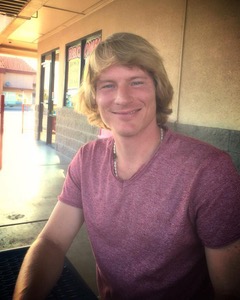
About five years ago I captured this photo of my son Ryan walking in downtown Phoenix. If you look closely you will see a homeless man sleeping on the ground by a trash can. 

24231809_10210865461695067_2479570311278099744_n.jpg

I couldn't help but notice the similarity in that man's clothing and my son's.  I thought "There but for the grace of God go I."  Followed by the thought, "But where is God's grace for that man on the ground?" I was troubled by that thought until I found a poem titled "Judge Not."

Judge not; the working of his brain
   And of his heart thous canst not see;
What looks to thy dim eyes a stain,
   in God's pure light may only be
A scar, brought from some well-won field,
Where thou wouldst only faint and yield.

The look, the air, that frets thy sight,
    May be a token that below
The soul has closed in deadly fight
   With some internal fiery foe,
Whose glance would scorch thy smiling grace
And cast thee shuddering on thy face!

The fall thou darest to despise...
   May be the angel's slackened hand
Has suffered it, that he may rise
   And take a firmer, surer stand:
Or, trusting loss to earthly things,
May henceforth learn to use his wings.

And judge none lost, but wait and see
   With hopeful pity, not disdain;
The depth of the abyss may be
   The measure of the height of pain,
And love and glory that may raise
This soul to God in after days!

Adelaide Anne Procter 1825-1864

There was a period of time when my son was very ill and sometimes homeless, relying on the compassion and generosity of strangers, asking for change to buy himself something to eat or drink. Today my son is the healthiest he has been in over 10 years. He's able to go to work and earn a paycheck. 

I was worried about how he would use the money when he received his first paycheck. Yesterday I gave him $40 dollars to have in his new wallet. Today he had $7 dollars left. He spent his money buying treats and food for his friends in the group home. He remarked about how good it felt to be nice and do something nice for others. 

Tonight we celebrated his 31st birthday at a seafood restaurant. During dinner, Ryan told me that, earlier in the day, he'd given a man on the street a handful of change because he remembered, when he was in that man's shoes, asking others for change.

Once again,  I'm so grateful and amazed. It's by the grace of God, doctors, medication, and unconditional love that my son, who's suffered for so many years with severe mental illness, has come out the other side.

And yet he remembers, "There but for the Grace of God go I."

TOO MUCH PRIVACY by Lynn Nanos LICSW

Although the federal law to protect patients’ confidentiality, Health Insurance Portability and Accountability Act (HIPAA), can appear excessive when it interferes with providing ideal care to psychiatric patients in emergency services, it presents even more challenges in inpatient work. In emergency services, releases of confidentiality documents are unnecessary when involuntary holds are in place. No release of confidentiality document has to be signed by patients to talk with their legal guardians or physician invoked health care proxies. 

I’ve had the privilege of working in both inpatient and emergency psychiatry as a licensed independent clinical social worker. Inpatient cases typically last longer and involve more clinical exploration than emergency services cases. Inpatient units are designed to plan for discharges and aftercare much more than emergency services are. 

It can be nearly impossible to obtain reliable information from a patient who is so disorganized that he or she can barely form a sentence, is highly agitated, is not wanting to be there, and is paranoid. As a social worker on inpatient, I obtained background information from family members or friends of the patients, updated them on progress, and gauged readiness for discharge based on their impression of patients’ progress. Some patients refused to allow me to provide information to anyone on the outside who cared for them.

I knew family members were concerned about patients on my caseload because of the desperation I sensed in their voices and frequency of calls. A young woman in her early twenties was admitted to inpatient because the police found her attempting to stop traffic on the highway. She couldn’t logically explain the reason for doing this after she adamantly denied that she was suicidal. She believed that her admission to the unit was all a misunderstanding and that if only I called the police to clear it up, she could be released. She wasn’t in any ongoing outpatient treatment because she didn’t believe that she was ill. 

Still, on an involuntary hold, the patient refused to sign the documentation that would have rendered her voluntarily there. She also refused to tell us the name and phone number of any family or friend. Apparently no next of kin knew that she was there and there was no family member listed in her chart. Despite her thought process and behaviors being disorganized, the psychiatrist didn’t believe this patient qualified for an extended involuntary commitment and discharged her accordingly.  

Just hours later, this patient’s mother called the unit. The call was transferred to me because I was the social worker and expected to manage most family interactions. After telling me that she’d been calling all local hospitals and police stations, the mother asked me if her daughter was there. During the uncomfortable silence as I struggled to find something to say, she began to cry and said that she'd thought about calling morgues, too. 

I felt horrible. Who was responsible for leaving this mother sick with desperation? Who allowed the psychotic patient to fend for herself without any care? Who dropped the ball? The police officer who authorized the involuntary hold either didn’t care enough to find a next of kin to inform or found it impossible to do so. The hospital emergency department staff couldn’t locate a family member. The patient probably didn’t give them any clue about this. 

Perhaps, if the psychiatrist had asked more questions of the patient and looked more closely at her, she would have understood that she wasn’t ready to be safely discharged. She’d probably have remained on the inpatient unit if her mother had been able to share her concerns early on. But now, there was nothing anyone could do to make things better.  

Aside from speaking in “code” to families, which I've done, there’s not much any of us can do besides advocate and put pressure on the government to make changes. In my forthcoming book, Breakdown: A Clinician’s Experience in a Broken System of Emergency Psychiatry, I offer a simple solution to alleviate HIPAA constraints.

Lynn Nanos

Lynn Nanos

WITH A HEAVY HEART by Dede Ranahan

This is an unanticipated post. 

Three-and-a-half years ago, I lost my son, Pat.  Those of you who are reading Sooner Than Tomorrow - A Mother's Diary, are coming to know Pat in what turned out to be the last year of his life. I'm so grateful to whatever grace it was that allowed me to capture his last year, much of it in his own words.

This evening, the wounds, inflicted three-and-a-half years ago, are open again. My 43-year-old nephew is in the hospital as I write. His doctors give him 24-72 hours to live.

I ask to talk with Michael on the phone. Speaking is difficult for him and he's in a good deal of pain. What do you say to someone who has 72 hours to live?

"I love you, Michael. I will never, ever forget you. I'm so sorry. I love you."

With his humor intact he replies, "Well, the good news is, I won't ever have to eat another one of your omelets."

My omelets? I don't make omelets because I know I don't know how to make omelets. I don't remember but I must have made the only omelet I ever made for Michael. Poor Michael.

Michael's dad, my brother, can hardly speak to me on the phone. He's crying. Michael's mom is crying. Karen, Michael's wife, is crying.

My daughter, Marisa, sends a text. She says, "This was read to me today at the end of my yoga class and I thought it especially timely. "

“Dear Human:
You've got it all wrong.
You didn't come here to master unconditional love.
This is where you came from and where you'll return.
You came here to learn personal love.
Universal love.
Messy love.
Sweaty Love.
Crazy love.
Broken love.
Whole love.
Infused with divinity.
Lived through the grace of stumbling.
Demonstrated through the beauty of... messing up.
Often.
You didn't come here to be perfect, you already are.
You came here to be gorgeously human. Flawed and fabulous.
And rising again into remembering.
But unconditional love? Stop telling that story.
Love in truth doesn't need any adjectives.
It doesn't require modifiers.
It doesn't require the condition of perfection.
It only asks you to show up.
And do your best.
That you stay present and feel fully.
That you shine and fly and laugh and cry and hurt and heal and fall
and get back up and play and work and live and die as YOU.
It's enough.
It's Plenty.”

Courtney A. Walsh

One more time, Michael. "I love you. Goodnight. Sleep well."

Photo credit: Pierre-Thomas Ziadehflickr

Photo credit: Pierre-Thomas Ziadeh
flickr

THANKSGIVINGS PAST - by Judy Waldo Bracken

We lived in Hobbs, New Mexico. It was Thanksgiving Day, cool and crisp outside. The two males in my life at the time — a blond 29-month-old toddler, and a tall, handsome 31-year-old man — filled my home with love. I was hugely pregnant and ready to pop, due in 9 days.

Cameron, my first son, had been born 10 days early, so it was entirely possible that I’d have a Thanksgiving baby. And I'd been having some of those familiar “birthing” twinges all day long. Questions filled my mind. If I ate a big meal would it interfere with the delivery? Would I have to have an enema or something unpleasant like that? My mother was supposed to visit in three days to stay with Cameron. What would we do with him if the birth happened sooner? 

We decided to go on as if all was normal, cooking a delicious turkey dinner and taking a walk afterwards. We put Cameron to bed and relaxed for a bit before settling in ourselves. And guess what? As soon as I laid down, I began having strong contractions at regular intervals. We waited about 45 minutes, and as the intensity increased, we decided to go to the hospital. After a few quick calls, arrangements were made with a neighbor to take Cameron and we rushed off.

When we arrived around 11:30 p.m., I was taken right away into the delivery room. Our regular doctor showed up, but he was not feeling well. Apparently, he'd eaten something earlier that day that didn’t agree with him. He had to keep leaving the room; thank goodness we had a capable nurse assisting. In no time at all, right after 1 a.m. my second child was born. A healthy 6 1/2 pound baby boy, delivered mostly by the nurse. He wasn’t born on Thanksgiving, but Ryland’s birthday now falls on or around that holiday every year. 

Ryland grew up, becoming a top student, an athlete, and an Eagle Scout. He had a great sense of humor and enjoyed friends and computers. Seven years ago, while a senior in college, he had his first psychotic break and has struggled with serious mental illness ever since.

This year, for Thanksgiving, Ryland was in a locked care facility. His dad passed away three years ago from an aggressive cancer. His younger brother and I enjoyed Thanksgiving lunch at the facility with him and some other families. For his birthday, we took him on a picnic — his first outing in months. Thanksgiving, this year, was much different from Thanksgiving 29 years ago.

I’m so thankful that Ryland is getting the care he needs—thankful that he is still here and we can be together.

Judy, Ryland, and StewartThanksgiving Day 2017

Judy, Ryland, and Stewart
Thanksgiving Day 2017

OH, WHAT A DIFFERENCE A YEAR CAN MAKE by Christi Anne

Oh, what a difference a year can make! 

My son, Ryan, has just realized a long held dream and vision for himself. He's enrolled in a job training program at the Marc Center and will be participating in employment enclaves earning $10.00 an hour. Ryan experienced his first psychiatric break in 2006 and was not well enough to work for over 10 years.

Just one year ago, Ryan was in crisis, experiencing psychosis, and needed to be hospitalized. Earlier in the day, he'd been served with an immediate eviction notice and was facing homelessness. He was frightened and refusing to leave his home.

Ryan's treatment team petitioned to amend his court ordered treatment. A judge signed the petition for involuntary treatment and a pick up order was sent to the Glendale Police Department. At approximately 6 p.m. on November 10, 2016, a swat team surrounded my son's house and began what would end up as a six hour negotiation. As a last resort, officers broke out the windows of the house and threw in tear gas and smoke bombs. Ryan huddled under his blankets on his bed and stayed in the house for 20 more minutes. Finally, the swat team forced entry and shot Ryan with beanbag guns In order to remove him from his home. 

Ryan spent the next 4 four months as an inpatient at a psychiatric hospital. The psychiatrist suggested we put Ryan on the big gun of psychiatric medications, Clozaril, because no other medication had worked. The medication is working and Ryan continues to improve. He's had minor setbacks over the last year but always gets right back on track. 

I look back over the last ten years and know how hopeless it once seemed. I see how far Ryan's come and it's nothing short of miraculous. If I've learned anything, it's to take one day at a time and celebrate each victory. Never give up. Never ever lose hope. Ryan's story isn't over and neither is yours.

Oh, what a difference a year can make!

Watch Christi's tribute to her son. Click on  Ryan Weeks The Overcomer

Ryan

Ryan

MY HOLIDAY STORY by Mary Barksdale

I grew up with large Thanksgiving and Christmas family get togethers and celebrations. So many happy childhood memories from these gatherings.

As time passed, things changed. As time passed, so did our family members. Some to death and others to the lives they were living. My adult holidays evolved into care-giver events. In the 1960s. my brother was diagnosed with a serious mental illness. Our holiday traditions depended on whether he was well enough to come home or whether we needed to be where he was. Later, my father's Alzheimer's disease dictated how we would celebrate the holidays.

In 2003, I got to see all three of my sons together for the first time in too many years. The eldest, being career Navy, could not get home often. Then, on January 2, 2004, my middle son, who had a serious mental illness, killed two police officers he believed were aliens.

The last few years Thanksgiving and Christmas were spent with my mother, who had dementia, in her assisted living facility. She passed away in September at age 103 1/2. (She wouldn't want you to forget the 1/2.) 

On Thursday, I'll spend the first holiday, ever, all by myself.

Mary's boys: Will, Farron, and Phillip

Mary's boys: Will, Farron, and Phillip

Read Mary's October 26, 2016 post: "Losing Farron."