BEFORE - SCENES FROM THE TRENCHES by Dede Ranahan

This is the preface to my book,  Sooner Than Tomorrow - A Mother's Diary. I'm going to post diary entries in two-week segments. To receive notice in your email inbox when new book posts are available, subscribe to my new blog, My Diary.  Click on My Diary in the navigation bar and enter your email address in the sign up box on the right.


BEFORE - SCENES FROM THE TRENCHES

Empty Shoes

Empty Shoes

How do you react when your 25-year-old son, during what is later seen as his first acute bipolar episode, kidnaps his teenage sister, drives her to a hospital, and convinces the emergency room staff to admit her because “she’s sick and my parents aren’t taking care of her”?

How do you compute when you arrive at the hospital to rescue your daughter — who has a cold — and you find her hysterical and strapped into a hospital bed?  You ask your son, who is staring straight ahead with empty eyes, “Why did you bring your sister here?”  With logic that reflects his internal confusion, he answers, “Because I knew I needed help.”

What recourse do you have when your son’s health care providers can’t agree on a diagnosis and decide to do nothing?

Whom do you rail against when your son goes through an eight week protocol at Stanford in a blind experiment for bipolar disorder, is seen for the last time with no follow-up appointment scheduled, and is given a slightly altered dosage of his medication?  And, within 24 hours, he’s involuntarily admitted (5150d) to San Mateo County Hospital in a state of acute bipolar psychosis.

Should you be distraught or relieved when your adult child admits himself to the emergency room of San Francisco General because “voices are telling me to kill myself”?

Where do you turn when, as the parent of an adult child with severe mental illness, you’re told, “You have no right to any information”?

How do you reconcile the fact that the state of New York, at New York taxpayers’ expense, hospitalized your son for six months in Bellevue Hospital, and paid his return airfare to the West Coast when he was stable?

In California, on the other hand, where involuntary hospitalizations last 72 hours, on eight separate occasions, judges asked your son, “Are you a danger to yourself or others?” And when he answered “no,” eight different judges released him with no money, no medication, and no place to go.

Do you dare find hope again when, a year after leaving Bellevue Hospital, your son has a job, earns an impressive score on the Graduate Record Exam, and receives a fellowship in creative writing at San Diego State University?

Do you give up your new found hope when, after three months at San Diego State, the attempt to teach, write, work, and conceal his mental disability is too much?  Stress causes a Grand Mal seizure and your son spins out of control.  He’s sicker now than when he was admitted to Bellevue Hospital. 

How do you get a fair hearing when, after five years and eleven involuntary hospitalizations, five of which were within one year, Social Security tells you, “Your son is denied SSDI benefits because he does not meet the criteria for severe and persistent mental illness”?

What do you do when your mentally ill family member doesn't have health insurance and can’t get a job to access group health insurance?

What do you decide when a California police officer asks, “Do you want me to press auto theft charges against your son for taking your car?  Answer ‘yes’ I send him to prison.  Answer ‘no’ I release him to the street.  There’s no time to consult a lawyer.  Tell me now.”

What do you say at three o’clock in the morning, when someone you’ve never met — a friend of your son’s — calls you in California from London and yells, “Get your son out of my house!  He’s destroying my property”?

What do you say at three o’clock the next morning when that same person calls back sobbing, feeling so guilty for having his friend forcibly admitted to a London psychiatric hospital?  Then he describes the scene as his friend, calm at first, fought ferociously as he was bound into a straitjacket and thrown into a padded cell. 

How do you cope when your mentally ill adult child is missing, and your daughter calls you in tears because a newspaper article describes a John Doe who killed himself on the railroad tracks in the vicinity where your son was last seen, and John Doe fits your son’s description? 

How do you process the hours waiting for the coroner’s report to confirm or deny that John Doe is or is not your son?  And in those hours, you pray he is not your son and then pray he is your son, to end his pain and to end yours.  And when the coroner says, “John Doe is not your son,” you take a deep breath but then think to yourself, John Doe is someone’s son. 

How do you forget the wracked faces and bodies you’ve seen while visiting your son in locked wards of prisons and mental hospitals?  What choices do you have when you realize you cannot, you will not erase from your memory their anguish and despair?

How do you live with your disappointment when, after searching streets for days, you can't find your son and you give up and go home without him?

How do you advocate when the world sees a bum, and you see the little boy you carried in your womb, nursed at your breast, laughed and played with, and knew in your heart was the world’s greatest child?  And you know somewhere, trapped inside his brain, the world’s greatest child is lost and trying to be found.

Dede Ranahan 2001

COMING UP TOMORROW ON MY NEW BLOG, MY DIARY - JUNE 15, 2017:  SUMMER: JUNE 15,  2013 - JUNE 29, 2013


Copyright Dede Ranahan 2017.  All Rights Reserved.

From the oldest

CAST OF CHARACTERS by Dede Ranahan

One week from today, on June 15, I'm going to begin blogging my book, Sooner Than Tomorrow - A Mother's Diary. Thought it might help readers to introduce the cast of characters. A few of you may find yourselves included in the list below — or recognize someone you know. And to Pat's Facebook friends, hope you'll smile as you read some of his Facebook posts once more.

It's getting really scary as I'm about to begin blogging my diary. It's so personal and we all know how unforgiving social media and the internet can be. Don't know why I feel so compelled to put this out there. Part is wanting to put faces on serious mental illness, part is my belief in what I have to say and how I say it, and part is because I want the world to know my son, Pat, was a good soul. He didn't meet many of the measures the world uses to define "success," but in so many other ways, he was the bravest, most true-to-himself person I've ever known. And if my diary helps other mothers feel like they're not alone, that will be a great outcome.

Subscribe to my blog: My Diary, and receive notice of new book posts in your email inbox every other week.

CAST OF CHARACTERS

The Jazz

The Jazz

FAMILY
Dede/Mim - Me
Patrick/Pat - My son
Pop - My Pop
GG - My Mother
Megan (Britt) - My Utah daughter
Marisa (Keith) - My Washington daughter
Kerry (David) - My California daughter
Aidan, Ashton, Sam, Elise, Regan, Ayla - My grandchildren
Jim (Sharon) - My brother
Annette - My Kansas City cousin
Michael (Karen) - My nephew
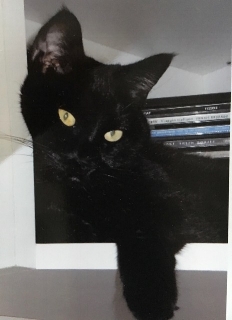
Jazzy/The Jazz - My black kitty cat
Lexi - Pat’s Black Forest Hound

FRIENDS
Grace, Joan, Irene, Helena, Kaye, Deanne, Jan & Jim, Scotty, Bill & Betty, Rose, Jean, other mothers like me.

CAMEO APPEARANCES
Prince George, Warren Buffet, Bill Gates, Vladimir Putin, Linda Ronstadt, Pope Francis, President Kennedy, Batman and Batkid, Nelson Mandela, Dr. Seuss, Malaysia Airlines Flight 370, Wolf OR7, California Chrome, Maya Angelou
*Special Guest Star - George Clooney

LOCATIONS
Northern California - My home
Seattle, Washington - Marisa’s home
Bend, Oregon - A weekend get-away


NIGHTMARES IN THE DAYLIGHT by Tama Bell

Thinking about my son and all he's been through —  serious mental illness, homelessness, jail (more than once), and in the last few years, incarceration in prison.

Every time he was jailed or imprisoned, I could be anywhere and I'd end up "seeing him." Each time I "saw" him, I'd stop in my tracks. I'd stare and struggle to get a better view of the young man I was sure was my son. One time, I had to turn my car around and circle the area to get a better view of the young man. A better view of "my son" who couldn't be released without the prison telling me.

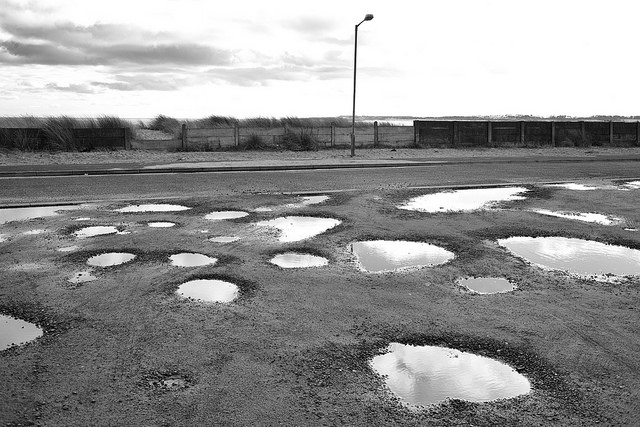
I knew he couldn't be released but I turned the car around anyway. I had to. "It might be him. Oh, my God! It looks like him and I recognize that hat (sweater, pants, sneakers, walk — you name it)." I turned the car around in an unfamiliar parking lot — a parking lot with huge potholes. I felt like I was sinking into each big hole, possibly never getting out. "Who cares," I said, because now I was almost positive this was my kid. I was going to find out how he was released from the county jail, or how he made it hundreds of miles from the prison (and I was thinking — having nightmares in the daylight — about those hundreds and hundreds of miles, and the time, the ungodly, long, endless amounts of time).

Am I healing I wonder? Again, I'm passing "my son" on the street, stretching my neck, staring out my passenger side window. He looks up as I slow down. He looks at me like I'm crazy — crazy as I feel. His eyes are unrecognizable. And now I see why. He is not my son and my mind is playing cruel tricks on me.


Photo Credit: PaulFlickr.com 

Photo Credit: Paul
Flickr.com


PURSUING HIS DREAMS by Ray Maternick

My son was released from Western State Hospital in Staunton, Virginia on May 1, 2017, and is living in a group home in Charlottesville. Andrew is doing very well and has a great attitude about his situation. He received help and treatment for three years because he was found not guilty by reason of insanity (NGRI) for stabbing his brother during a psychotic episode and he became a ward of the state. I wish everyone could receive the kind of treatment and help that Andrew received. In the long run, it would make a huge difference.

During Andrew's time in the hospital, he turned to what he knew best — music. He wrote and recorded over 70 songs. Many of his songs told of his experiences with serious metal illness, what he felt, and what and who he saw around him. His songs spoke about loneliness, despair, and hope. 

Some write books about their experience. Andrew and I decided to cut a record album consisting of 11 selected songs from his first year as a patient at Western State. During that time, he was allowed to have a guitar in his room and a cheap battery powered recorder.

Andrew's hope is that his speaking out will encourage others and let them know they're not alone. The album is now becoming a reality and we hope many of you might obtain a copy and participate in the process.  

Andrew's album is called “Code Purple – Andrew Neil” and the release date is tentatively scheduled for October 10, 2017, (the 25th anniversary of World Mental Health Day). “Code Purple” is a term used by Western State when there's a problem on a ward that requires security. The album is being produced by Tree Heart Records LLC.

If you buy the "Code Purple" CD and/or the 180g Vinyl record, your support will help Andrew fund his project, begin his journey to live independently, and further pursue his songwriter dreams. When you click on the PledgeMusic link below, you'll see a video of Andrew talking about his album and why he decided to make it.  

http://www.pledgemusic.com/projects/andrewneil

Thanks for watching.


Andrew Neil

Andrew Neil

I'M BLOGGING MY BOOK - MY GIFT TO YOU by Dede Ranahan

Three weeks from today, June 15, 2017, I'm going to begin blogging my book, Sooner Than Tomorrow - A Mother's Diary. I hope you'll subscribe to my new blog, Blog 2: My Diary.

There are several reasons I've decided to blog my book. As I state in the Introduction (on my website), I'm motivated by reach and I believe, through my blog, social media sharing, and word of mouth, my story may reach more readers than it would as a book sitting on a shelf. And I enjoy the interactive aspect: reading your comments and emails, and building a sense of community.

My original thought, when I began, was to leave a time-capsule for my children and grandchildren. When my son died, unexpectedly, a month after I finished my diary, I realized I'd recorded the last year of his life. My written words (and his) suddenly took on new meaning. I worked with two editors and a dozen early readers to make my book the best I could, to make it worthy of people's time. And the constant passing of time, my time, gave me a sense of urgency. I thought, if I'm going to share this story, I need to share it now.

When you subscribe to Blog 2: My Diary, you'll receive email notices of new book entries in your email inbox. To keep with the original rhythm and seasonal pacing of my diary, I'm going to release it in two-week segments every other week.  Please spread the word to family and friends, especially to those who have no experience with serious mental illness. 

Serious mental illness is just one aspect of my book. My diary's also about aging and family and ordinary people in this time and place. In 300 years, historians might say, "Look. What a find. A diary about everyday life in the distant past." I hope current readers will say, "Look. What a find. A diary about everyday life in 2013-2014."  

Thanks for your interest and participation. I really do mean Sooner Than Tomorrow - A Mother's Diary as a gift to those (whether that's 5 or 50 of you) who catch a resonating echo while wandering in my woods. And special thanks to my daughters, Megan, Marisa, and Kerry, who've read what I've written and given me permission to put it out there. I wouldn't do it without their blessing.

To subscribe, click on My Diary, in the navigation bar above, enter your email address in the box on the right, and hit the Subscribe button. 


Image by mkuess/iStock / Getty Images

Image by mkuess/iStock / Getty Images

A MOTHER'S REQUEST IN COURT - by Kate Shultz

Here is the statement Kate made to the judge at her son's sentencing:

I have to begin by expressing how profoundly sorry I am for the severe trauma and loss that Melissa, John, Evan and the rest of their family and friends, have suffered, but words don’t even exist to express it adequately. It is only on the advice of attorneys, concerned with both the criminal and civil cases filed, that I have not reached out to you, which goes against every fiber of my being. So many people were catastrophically affected by this tragedy and not a single day goes by that I don’t think about the agony it’s caused for you and pray for your healing.

There never was any “good” outcome to this trial. Nothing decided here will take away the suffering we’ve had to endure, the pain that we all continue to feel or the resulting hardships we must now face. This can never be undone for our families. It would have been difficult enough for my son to accept having a serious brain illness had he gotten the treatment we were so desperately seeking, but the remorse over what he’s done to a family he loves, because of his illness, will haunt him forever. However, just maybe, by shattering the silence, indifference, and lack of understanding surrounding serious mental illness and our failing mental health industry, we can effect change that will help the next families in crisis. This is the only way to bring about justice now.

The human brain is like any other organ in the body — able to benefit from healthy habits while still susceptible to injury, disease and illness. Yet we don’t treat people with brain illness like we treat those with serious illness in other parts of the body. Imagine your child comes home with a severely broken arm, calling the doctor and being told you’ll have to wait 3 months for an appointment. Or being sent home from the emergency room without treatment or medication and having doctors tell you that you’ll have to set it yourself!

Whereas a broken bone is evidenced by pain, swelling, maybe even bent or protruding bones, the brain controls (among all other bodily functions) our thoughts, reasoning and behaviors. Serious brain illnesses, such as schizophrenia spectrum disorders, manifest themselves through strange, unpredictable and often violent or criminal behaviors. The sufferer is shunned, denied treatment, and very often ends up incarcerated. Everyone who cares about or is victimized by them suffers. This has to change and none of us is safe until it does. 

When this horrible tragedy first happened, Chief Public Defender, Robin Lipetzky, went in front of the television cameras and said she had no doubt that this was a case of serious mental illness and she was absolutely right. The prosecuting attorney, Simon O’Connell, also went before the cameras saying how we aren’t even safe in our own homes anymore, and he was also right — though I don’t believe he fully understood or appreciates why. During my son’s trial, we heard 5 different doctors, experts in the field of forensic psychology and psychiatry, who spent about 60 hours evaluating him, come up with closely related diagnoses all within the schizophrenia family of illnesses. They referred to my son'ś as a “textbook case," and no other motive whatsoever was presented for his crime because there is none. This tragedy was caused by the inaction of our police officers and county mental health emergency services and could have been prevented.

Two fallacies are most frequently offered as excuses for this inaction. The first is the pretentious claim that it'ś out of respect for my son'ś civil rights. When the responding officer refused to arrest him on an involuntary 51/50 hold, and I told him that I thought his trying to walk to South America barefoot did constitute “a danger to himself,” the officer callously responded (and I quote),“If your 18-year-old son wants to walk to South America barefoot and live in the jungle that’s his right!” When any sane person considers what has become of Jordy'ś or my son'ś civil rights now by denying him treatment before tragedy, this argument shows itself to be blatantly irrational.

The second false excuse is that there aren't enough resources, in terms of staff and facilities, to properly treat those with serious mental illness, and that to do so would be too costly. All research shows that not providing these services leads to much greater costs to the communities at large. You don't need to read the research (as I have done) to know this. Just consider the ridiculous cost of this trial. The expert witness fees for the 5 doctors alone amounted to an excess of $50,000 or $60,000. There are so many other unseen costs as well resulting from the lack of treatment and incarceration of the mentally ill, not the least of which are the human costs in loss of life, loss of productivity and suffering.

In order to move forward, I've had to struggle with so much anger over the fact that, when I suspected that my son was suffering from a serious brain illness and I called for help, I was dismissed as a “hysterical mom.” Even though I'd explained, as calmly and respectfully as possible to the responding officer, that I'd lost my oldest child to suicide just two years earlier and my son had already had a serious psychotic episode just six weeks prior. No one who knew my son could ever have imagined him capable of what he did. He'd only been known to be a kind and highly respectful young man, who'ś never even been in a fight in school. My greatest fear, at that time, was that he’d end up among our countless homeless on the streets and I’d never see him again. To add insult to injury, I come to find out that this officer has been off work receiving worker’s compensation (factor that into the cost of all this) because of this incident, while all the rest of us have had to find a way to pick up the pieces and go to back to work. 

As wrong as he was, I have already forgiven this officer because I have a great appreciation for what our officers are being forced to deal with on a daily basis. My own father is a retired San Diego County Sheriff's homicide detective who retired with severe job-related depression, and my grandfather is a retired Riverside County Sheriff, who also taught criminology in San Francisco. They were two of the first people I called when my son was arrested. It was my grandfather, now in his 80’s, who told me that when he was a Riverside Sheriff in the 50’s and 60’s, they had a squad they unofficially referred to as the “psycho” squad. However un-P.C. that name may be today, they were specially trained to deal with people suffering from mental illness, de-escalate situations to apprehend them peacefully, and once they did they had a place to take them to get help. And this happened often enough that they had an entire squad for it! That kind of training and those treatment facilities don’t exist anymore.

As I was researching our current state of affairs, I got hold of the catalog of offerings for the American Correctional Association's 2015 Annual Summer Conference in hopes of finding something encouraging. When I turned to the section related to mental illness all I found was a session titled, ¨How to Bullet-proof Yourself Against Litigation.¨

While too many news stories these days point to the obvious need for better officer education and training around responding to people with mental illness, placing all of the responsibility on them is unfair and unwise. Having voluntarily gone to Contra Costa Regional Medical Center for an evaluation, my son was not taken seriously, even though he was clearly delusional. And even though he signed the paperwork in the ambulance before he left, putting me under the HIPPA umbrella, I was not contacted in order to give them a more complete psychiatric history until they had already put him in a taxi.

After I found out he had been discharged after such a brief time, I asked to speak to a psychiatrist in charge. I explained the situation and once again was treated with disdain. When I asked for advice or possibly medications, I was offered absolutely nothing. When I asked if I could come pick him up I was told he had already been sent home in a cab. Our treatment facilities must start including families when making diagnoses and stop relying solely on those whose brains aren’t functioning right to provide critical information and make decisions regarding their own well-being. 

I've been teaching since 1991 and have worked with thousands of students and their families. Serious mental illnesses like schizophrenia affect, at the very least, 5% of the population, meaning hundreds of those families have faced the same difficulties and I can’t help but imagine what horrors they went through or where they are now. Today, I cannot go into my 4th grade classroom and look at my young students without wondering who’s next? Justice for Jordy requires that we acknowledge the failures that led to his horrific death and do whatever we can to fix things before more and more tragedies like this occur.

The keys to overcoming any great tragedy or challenge are forgiveness and gratitude — forgiveness because it unblocks the path to understanding and change, and gratitude because it gives us the strength to carry on. Sometimes the only gratitude to be found is for the opportunity to grow stronger and bring about change for having been through the ordeal. I am so grateful for the huge amount of support, compassion, and understanding we’ve received from our local community, and from the rapidly growing community of families going through similar experiences around the country. Since this happened, I’ve been welcomed into a number of private, secret groups. Some of these groups have been established to provide comfort and assistance while others are focused on political action to bring about policy changes. These groups are secret for many reasons, probably the greatest of which is the fear of public perception of the mentally ill.

As far as my son'ś sentencing, I would like to respectfully request just one thing from the court. I've already lost one child to suicide and my son, Billy, has attempted it twice within this detention facility. All research shows that the risk of suicide increases dramatically with both lack of treatment and incarceration. I ask that Your Honor order that all the doctors’ notes, evaluations, and test results be included as part of my son'ś permanent psychiatric record to follow him wherever he is sent, and that he may receive appropriate care in order to prevent further suffering and death in our family. 

Thank you, Your Honor, for allowing me this time and listening to me.

The judge found Kate's son, who suffers from serious mental illness, guilty of murder and sentenced him to prison for 30 years to life.

Kate and Billy days before the tragedy.

Kate and Billy days before the tragedy.