Intersection.
Hope you have a good weekend everybody!
Your Custom Text Here

Photo Credit: Marisa Farnsworth
Intersection.
Hope you have a good weekend everybody!

Deborah's son, James, and her grandson, Sean Michael.
My son suffers from bio-neurological brain disorders. Without the right treatment and support, his medical condition prevents him from realizing that he has a serious illness. The untreated symptoms of his brain disorders control his thoughts and his actions. His untreated symptoms also control our lives.
My son has schizophrenia, anosognosia (in laymen’s terms, "lack of insight" or "lack of awareness" that he is ill), a history of Capgras Syndrome, a history of command hallucinations, and PTSD.
So what does all this translate into? A preventable tragedy that was almost impossible preventing.
What are our numbers? 1:6. That’s our family’s conservative ratio.
Now what does this ratio mean? It means that my son represents the one (1) who is suffering from his illnesses. The six (6) are the other people in our family who are directly connected to him.
Our lives have been significantly affected by his untreated or treatment resistant medical illness. We live with constant emotional stress from the daily trauma and drama of his severe symptoms — including psychosis and crisis evaluation teams. We experience situational mental illness, like depression or PTSD, due to the hopelessness and isolation of caring for someone with a severe brain disorder when they're not being properly treated and their symptoms are not under control.
We've lost wages from jobs we've had to give up to care for our loved one and from having to move from one place to another due to stigma. We've missed chances of advancement at work and taken lower paying positions in order to be available to meet the needs of our son. We've faced family stress that could lead to divorce and further financial and mental decline of the entire family.
It means that my son’s illness has affected more than just him. It's also impacted his school system, our local sheriff’s department, the juvenile courts, and our relatives who helped provide financial aid to get him on the ‘fast track’ to treatment.
His illness dictated his and our lives — how we spent our time, our money, and our emotional resources. There was nothing left over for our needs. We were all consumed trying to save him, but we're among the lucky ones. In spite of the odds against us, our family stuck together and did what we needed to do to secure his compliance to the right treatment.
What was the cost for his intervention and treatment? Here is a start at some of our other numbers:
Lost wages: I quit my job at DreamWorks and later at Disney on a union job that paid me $70,000 a year with full benefits. I was the only one who could care for my son.
Mental Health: I didn’t have any. I lived in constant high stress of being attacked and threatened by my son along with the stress from the fear of losing him, and the stress of not being able to find timely treatment for him. I paid not only with money, but with my mental and physical health.
Probate Conservatorship: $6,000.
One month in a dual-diagnosis facility before his SSI started up: $6,000.
Qualified therapist who didn’t take insurance: $160.00 per hour once a week.
Equine therapy which worked the best from all the therapies we tried: $160.00 per session per week.
‘Fast Track' — by-passing the waiting list for medical recipients and getting into an outpatient treatment facility that held the most promising form of treatment but didn’t accept our insurance: $250.00 per appointment for two years until, finally, they accepted our son's Medi-Cal.
Blood monitor company: $150.00 per month. We’re going on our seventh year now.
Licensed nutritionalist: $120.00 per visit.
Independent blood test for mercury and other toxins: $180.00.
The list goes on and on. Our son's been in therapy since second grade to work with the behavior we were trying to deal with daily.
We spent and lost thousands of dollars. We have little retirement saved and my husband and I are 57. It was worth every penny and every sacrifice. When we look at and enjoy our son today, there's no price we can put on his life or on how close we all are now.
The problem is, why should we have to pay such a high price for medical treatment for our son? What about the families who don't have the resources we did to secure early intervention and compliance to treatment? What happens to them? What are their numbers? How much worth can you give to a life?
What if my son decides to be noncompliant in the future? What would our fate be then? All this affects and still concerns my whole family. My son’s illness isn’t just his illness. It’s a 1:6 ratio in our family. I’m not counting my brother’s suicide at 15 or my mother’s issues and how they impacted us.
What are your numbers?
There are no statistics that include family numbers in their studies. We're the ones they don’t know about or talk about. We're more invisible than the ones we advocate for. It’s up to us to unify and speak out in one voice for what we need — for our rights to get appropriate treatment for our loved one's medical condition.
It’s their illness but It affects us all.
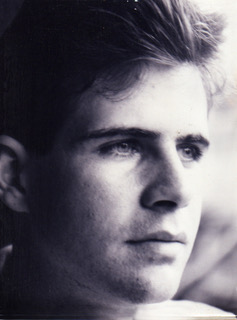
Paul as a young man
What do I do to protect my son, Paul Michael Muskine?
California state medical facilities seem to be doing a good job of evaluating, diagnosing, and caring for mentally ill people. From my experience, Sacramento County people are the opposite - not good at evaluating, diagnosing, or caring for mentally ill people. Why is there so much difference?
My son Paul's been locked up for 1 year and 18 months. He's now at the California Department of Corrections and Rehabilitation in Vacaville where he's diagnosed as severely mentally ill. This is not new. Paul was diagnosed many years ago as severely mental ill. Sacramento Mental Health Court dismissed Paul because of his illness but the public defender, the DA, and the judge sent him to prison when he was not balanced to stand trial and was denied his right to a trial.
In the case against him, I believe Paul was the victim. A drug dealer, who was 6 feet tall and 200 pounds, attacked him. Paul, 5 feet 7 inches tall and 108 pounds, was not the attacker. He was defending himself. I'd do the same thing if I were in that situation.
Turning Point, receiving Prop 63 funds to be Paul's mental health care provider, left him in a rundown motel populated with drug dealers. From his room, Paul had no access to a kitchen. I'd take him shopping and he'd buy two pieces of chicken. He'd cook one piece in a broken down electric pan and store the other piece in a plastic bag in a basket on the floor. The mice would eat the chicken. When I told Turning Point, they said, “We'll get Paul a table and chair." They got Paul a table and a chair and left him in the same situation. He lost 57 pounds.
What do I do to protect my son, Paul Michael Muskine?

Paul today
Photo Credit: Marisa Farnsworth
After the rain...
Hope you have a good weekend everybody!
I am without the benefit of extended family beyond my 3 sons and 2 grandsons. Sometimes, when I feel so weary from the chronicity of this disease (bipolar disorder with psychosis), I break down. I do. I feel too broken to go on, and my thoughts wander in search of anybody in my life who gives a damn.
It's been like this since my youth, through physical and sexual abuses, through childhood kidnapping, through so many foster homes and all the void and vacuum that were the source of my soul-searching -- a frenzied and fevered search for reprieve, and I am always left with my own nothingness.
By some unexplained grace, though, through the haze and across the distances that separate me from anyone who speaks to me of home or happiness or love, I meet people who somehow help to fill this gnawing emptiness, who give me pause to feel the internal excitement of having someone to celebrate.
I know that you could not know, dear friend -- nor can others who have become a sort of secret, source of celebration for me -- but you've given me moments of peace, of calm in the storm, of hope and of courage. Thank you for all that you do, and for all that you do without even knowing it. Your life-energy has a far greater worth, perhaps, than you can even imagine.
(Especially for Mary Ann Renz)

Donia Que
Hello. This is me and my friend Walter Pratt, Jr.

I met Walter when I first started doing street outreach in St. Louis. At the time Walter lived under an overpass. I kept up with Walter as he moved around. He didn't go far. He slept in the park for a little while after he moved from the overpass. Then he moved to Tent City over on the Illinois side.
Walter was there for me as much as I was there for him. Walter watched as I went to California on more than one occasion. He saw the heartache in my eyes when I'd come back without my mom.
A few months ago, Walter announced that he was going to California. Walter knew my mom was last seen living homeless in Santa Monica, California in 2013 and he wanted to find her for me. As soon as I heard the news and Walter's plan, I went to Tent City to talk him out of it. I told him how dangerous the streets in California could be. I told him that I'm sure my mom's moved on and that I've been there numerous times and just can't find her. I also told him, if something were to happen to him, it would devastate me to the core.
Of course, Walter's mind was made up. He was going and that was that. So then we discussed California and the different places in the Los Angeles area. I told him, if I were homeless, I'd live on Venice Beach. I told him about the boardwalk and how beautiful it is. I told him it's not against the law to be homeless on the beach there. Another outreach person bought Walter a bus ticket to Los Angeles and another homeless advocate printed fliers of my mom for him.
Walter left for California a few days ago and arrived in Los Angeles. He told me he figured out how to use Wi-Fi on his phone so he was able to call me through Facebook to let me know he made it. He told me he was going to start his search. I reminded him, again, about Venice Beach and told him to be careful. I asked him not to go to Skid Row at night until he gets familiar with the area.
If you're in California and see my friend, Walter, please give him a big hug for me. And please join me as I continue to pray for Walter's safety. Walter's forever captured my heart.
I love you, Dear Friend. <3 ~Robin~
Robin Burton is founder of Missing & Homeless

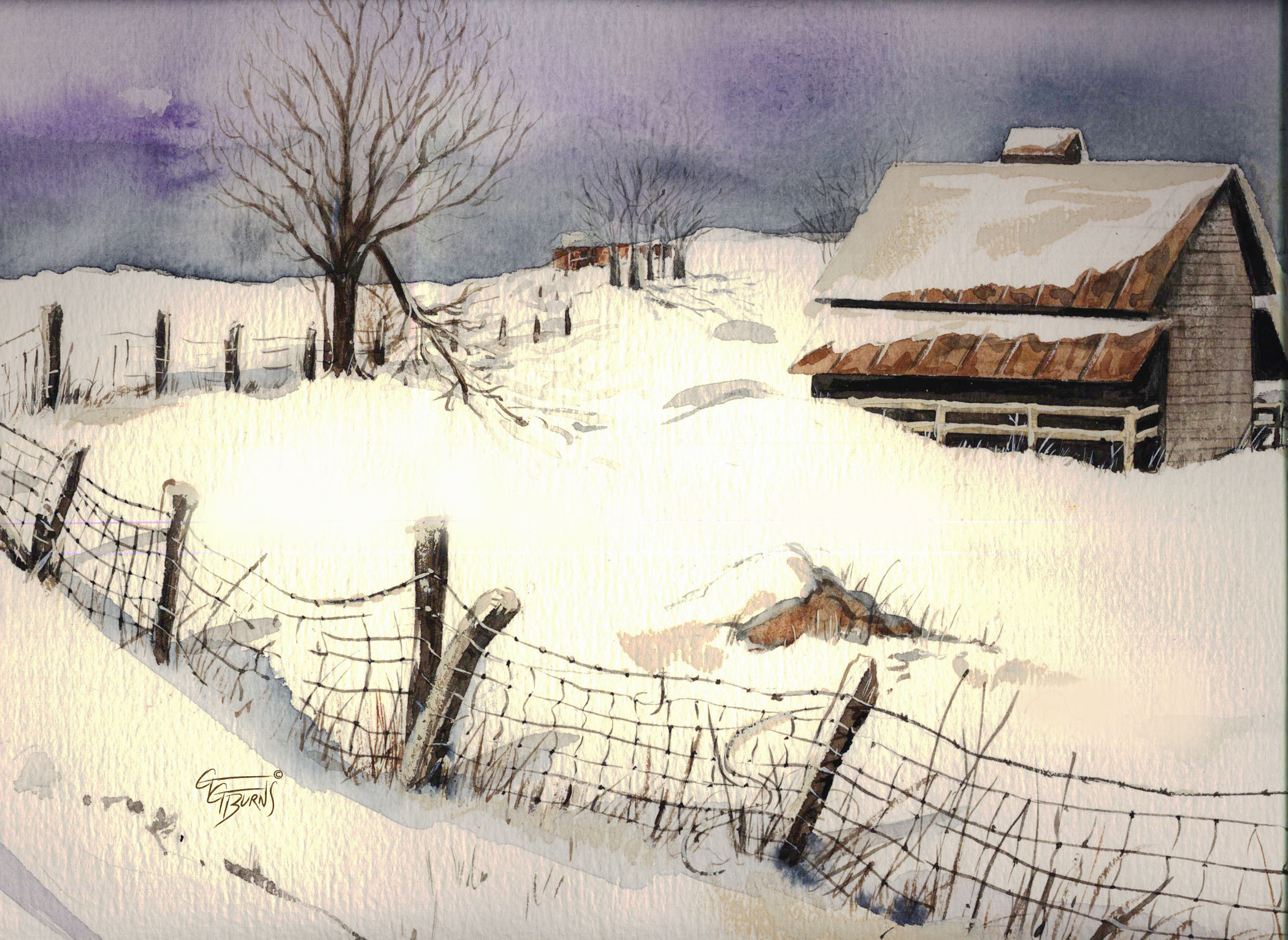
“Country Barn In The Snow”, painted by artist & brain health advocate GG Burns
For more info click here:
http://fineartamerica.com/featured/country-barn-in-the-snow-gg-burns.html
Hope you have a good weekend everybody!

There are approximately 10 million adults (18 and over) with serious mental illness (SMI) in the U.S. That is 4.2% of all adults.
I want to express my heartfelt gratitude to all who signed our petition and joined the families and advocates of the 4% in our campaign to get real and #GetSerious about mental illness. We have started a conversation and we will keep it going. For now, we will use this petition site to communicate while we organize. We hope to soon share information on where we can unite the families and advocates of the 4%.
I have heard that we are "rocking the boat" which is a good thing because sometimes it feels like the system is still rearranging the deck chairs while the ship is going down. How many times have we heard families and the advocates of the 4% talk about how they are drowning? How many support groups have we been in where we hear a mother, father, sibling, friend or partner describe the torture of being forced to watch their loved one drowning in the mental illness system of luck and heroics? We are tired of watching our families die when we should be using all forms of life saving measures available.
These are the questions that must be answered by NAMI, the Mental Health Association, SAMHSA, CMS, Disability Rights orgs, human rights orgs, civil rights orgs and all health organization who claim to speak for us. They do not. We are the voices of the 10 million, the 4%. We will speak for our families. We will not be silent any longer. We will be respectfully calling out injustice, inequity, inhumanity and discrimination against our families. We welcome and invite others to join us.
While the systems that impact our families, our children and our communities are being integrated, redesigned and transformed, we are being tokenized and marginalized. We are being “othered” and shunned all in the name of inclusion. The “Nothing About Us Without Us” “mental health” mantra doesn’t apply to our adult children or our families because too many are locked up out of sight and out of mind, literally. But, we are “us” too and we refuse to be left out of any system conversations that are discussing how our loved ones will live and die.
I started this petition in order to have a real national conversation about families like mine, sons like mine, and the system’s role in silencing our voices. Because my son was too sick to play the system game, he has been locked away in psychiatric facilities or solitary jail cells for the majority of the past 15 years. So I became Danny’s voice and our family voice on local, state and national stages.
For those who say that my son should speak for himself, I agree. But for now he is mute. He was not born mute. However, he has been muted by a system that still supports failing and jailing over help and hope for those who lack the capacity to self-direct their medically necessary treatment and care.
While currently, I have lost the ability to physically hug my son, I do hear his voice at least twice a day when he calls me. He tells me he loves me. He tells me he is sorry for being so sick. He tells me he misses his dad and me and our home. He misses his sister, his dog, his friends, and his own bed. We love and miss him too. So, for now, we are his voice in system change. We are his “us.”
We are grateful to Pete Earley for sharing our "open letter" and video on his blog http://www.peteearley.com/blog/ and for respecting our voice. He has also shared NAMI’s response to our letter. As the conversation continues, I hope that we will not be seen as “angry activists” or “critics” because we are really much more. We are partners in care.
We will be sharing the NAMI response in a future update, along with our rebuttals. Please share this petition, tweet about it, talk about it and help us continue #ShatteringSilence about serious mental illness.
Let's keep rocking the boat, together…Teresa
Use the link below to read and sign the 4% petition:
SHATTERING THE SILENCE
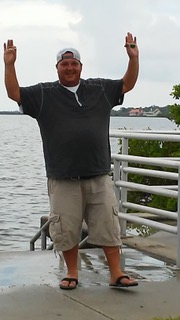
Jason
I will never forget the night I woke up at midnight to find my 33-year-old son crawling on the floor. As I walked towards him, he yelled, “Get down! They have guns. We're surrounded.”
I realized that something was very wrong with my son. I got down beside him, speaking gently. I asked him, “Who has guns?”
He said, “The FBI. The CIA.”
There was no one but the two of us. He continued, “We’re surrounded and in danger. They can hear through the walls.”
I told him, “Stay here. I’m going for Dad.”
I crawled down the hallway into my bedroom, woke my husband and told him, “Something is terribly wrong with Jason. Call 911. I think our son’shad a mental breakdown.” The sheriff and ambulance arrived and pretty much confirmed what I had said to my husband.
That night our lives changed forever.
My son was admitted to the hospital and we were told he would be transferred to the Phoenix County Psychiatric hospital where he would be treated and evaluated for severe mental illness. Our hearts and minds were numb, crushed. We, as a family, became broken — just like our son. Our dreams and hopes were shattered. We didn’t know this was the beginning of a horrific journey that we, as a family, would travel alone with no road map.
My son was diagnosed with Bipolar 1 (psychosis). He was hospitalized for 30 days (his longest stay). Thus began numerous hospitalizations. We watched over him 24/7. He was so different. We’d lost the son we raised and learned that he’d never be the happy-go-lucky, funny, social, person we knew. The meds kept him disoriented, sleepy, and lifeless.
We were lost. We began to read, research, and ask a lot of questions. We enrolled in NAMI’s Family to Family 12-week class. Slowly we learned the devastating truth. No one had answers. We lived one day at a time. The revolving door, cycle after cycle, merry-go-round circus began — treatment, hospitalization, overdose, under-dose, multiple meds, horrific episodes of anger, violence, running away, arrests, jail, court ordered treatment, probation, involuntarily & voluntary hospitalizations, suicidal episodes, nine petitions.
“Gravely disabled.” “Seriously mentally ill.” Words that held stigma, shame, and loss, brought devastation. It became clear our son needed 24/7 care. We pleaded, searched, fought, and finally obtained transitional housing — only after Jason ran away, stopped his meds, became psychotic, and a danger to himself and others. Multiple times he was on court ordered treatment.
I wrote letters to the governor, to President Obama, to his clinic, psychiatrists, and caseworkers holding them accountable for my son and our family if tragedy occurred due to lack of help. Shortly thereafter, my son was placed in transitional housing with 16-hour onsite staff responsible for ensuring that meds were taken. I visited Jason daily, made him breakfast, watched him take his meds, drove him to every doctor appointment, trusting no one (health professionals, case mangers, had all let us down).
I took early retirement and became my son's caregiver. My son started to improve. The daily routine began to work. He didn't think he was sick (anosognosia) but he began to trust us. It took 3 years. Jason developed diabetes, high blood pressure, and gained a lot of weight, but he continued to obey us and believed us when we told him, “We will keep you safe and off the streets. However, you must continue taking your meds.”
We were making progress. Then I had to file a restraining order. Jason had pushed me out of the car and threatened me. I knew, in his psychotic state, he could kill me.
After homelessness, more hospitalizations, arrests, and court-ordered treatment, the cycle took a turn for the better. With treatment, the right meds and constant family involvement in his care, we saw improvement. We wanted Jason to live independently, however, we knew he wouldn't be able to take his meds without supervision. And without his meds, he’d become psychotic and dangerous, not by his nature but because of his illness. We learned to separate the ugliness of his illness from the son we knew and loved. We made the decision to bring him home — again. We knew that no one could love or care for him better than his family. Our family bonded together demonstrating to him that we would not desert him. Tough love doesn’t work on a broken mind.
At age 67, our retirement dreams were no longer our priority. Our son was our priority. We moved from Arizona to Florida because Jason’s always loved the beach. We left the care and support we had behind.
Now, we pray that Florida will help our son but, truth be told, there’s no help in the USA, especially not in Florida (retirement state). Mental illness is not a crime.
Sylvia Charters is a founding mother of MOMI (Mothers of the Mentally Ill) Florida.

Photo Credit: Marisa Farnsworth
Rainbow Crossing
Hope you have a good weekend everybody!