Hope you have a good weekend everybody!
HAPPY PIC
“Country Barn In The Snow”, painted by artist & brain health advocate GG Burns
For more info click here:
http://fineartamerica.com/featured/country-barn-in-the-snow-gg-burns.html
Your Custom Text Here
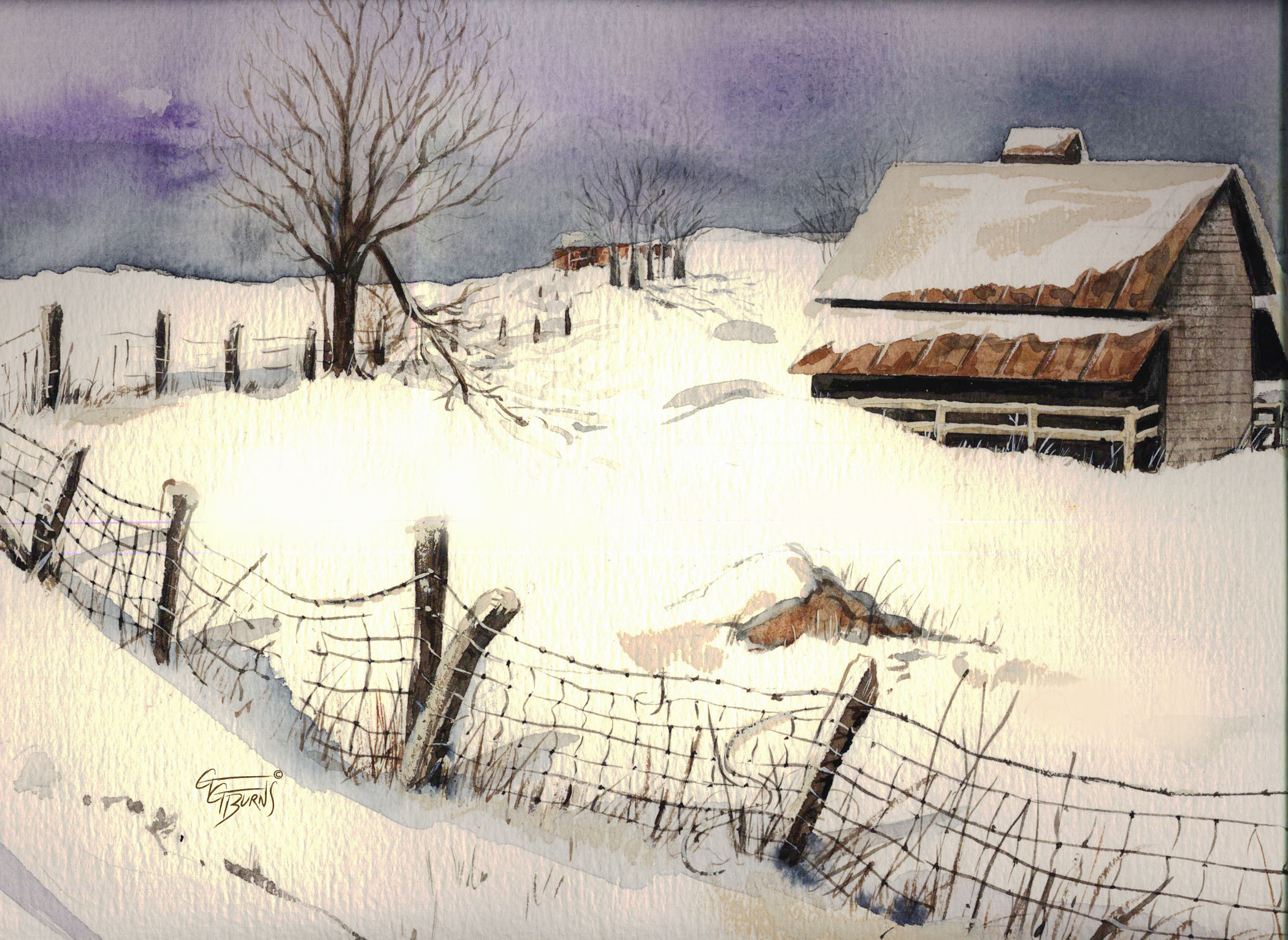
“Country Barn In The Snow”, painted by artist & brain health advocate GG Burns
For more info click here:
http://fineartamerica.com/featured/country-barn-in-the-snow-gg-burns.html
Hope you have a good weekend everybody!

There are approximately 10 million adults (18 and over) with serious mental illness (SMI) in the U.S. That is 4.2% of all adults.
I want to express my heartfelt gratitude to all who signed our petition and joined the families and advocates of the 4% in our campaign to get real and #GetSerious about mental illness. We have started a conversation and we will keep it going. For now, we will use this petition site to communicate while we organize. We hope to soon share information on where we can unite the families and advocates of the 4%.
I have heard that we are "rocking the boat" which is a good thing because sometimes it feels like the system is still rearranging the deck chairs while the ship is going down. How many times have we heard families and the advocates of the 4% talk about how they are drowning? How many support groups have we been in where we hear a mother, father, sibling, friend or partner describe the torture of being forced to watch their loved one drowning in the mental illness system of luck and heroics? We are tired of watching our families die when we should be using all forms of life saving measures available.
These are the questions that must be answered by NAMI, the Mental Health Association, SAMHSA, CMS, Disability Rights orgs, human rights orgs, civil rights orgs and all health organization who claim to speak for us. They do not. We are the voices of the 10 million, the 4%. We will speak for our families. We will not be silent any longer. We will be respectfully calling out injustice, inequity, inhumanity and discrimination against our families. We welcome and invite others to join us.
While the systems that impact our families, our children and our communities are being integrated, redesigned and transformed, we are being tokenized and marginalized. We are being “othered” and shunned all in the name of inclusion. The “Nothing About Us Without Us” “mental health” mantra doesn’t apply to our adult children or our families because too many are locked up out of sight and out of mind, literally. But, we are “us” too and we refuse to be left out of any system conversations that are discussing how our loved ones will live and die.
I started this petition in order to have a real national conversation about families like mine, sons like mine, and the system’s role in silencing our voices. Because my son was too sick to play the system game, he has been locked away in psychiatric facilities or solitary jail cells for the majority of the past 15 years. So I became Danny’s voice and our family voice on local, state and national stages.
For those who say that my son should speak for himself, I agree. But for now he is mute. He was not born mute. However, he has been muted by a system that still supports failing and jailing over help and hope for those who lack the capacity to self-direct their medically necessary treatment and care.
While currently, I have lost the ability to physically hug my son, I do hear his voice at least twice a day when he calls me. He tells me he loves me. He tells me he is sorry for being so sick. He tells me he misses his dad and me and our home. He misses his sister, his dog, his friends, and his own bed. We love and miss him too. So, for now, we are his voice in system change. We are his “us.”
We are grateful to Pete Earley for sharing our "open letter" and video on his blog http://www.peteearley.com/blog/ and for respecting our voice. He has also shared NAMI’s response to our letter. As the conversation continues, I hope that we will not be seen as “angry activists” or “critics” because we are really much more. We are partners in care.
We will be sharing the NAMI response in a future update, along with our rebuttals. Please share this petition, tweet about it, talk about it and help us continue #ShatteringSilence about serious mental illness.
Let's keep rocking the boat, together…Teresa
Use the link below to read and sign the 4% petition:
SHATTERING THE SILENCE
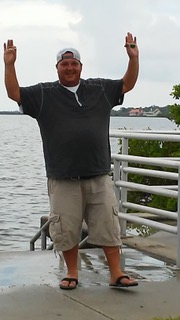
Jason
I will never forget the night I woke up at midnight to find my 33-year-old son crawling on the floor. As I walked towards him, he yelled, “Get down! They have guns. We're surrounded.”
I realized that something was very wrong with my son. I got down beside him, speaking gently. I asked him, “Who has guns?”
He said, “The FBI. The CIA.”
There was no one but the two of us. He continued, “We’re surrounded and in danger. They can hear through the walls.”
I told him, “Stay here. I’m going for Dad.”
I crawled down the hallway into my bedroom, woke my husband and told him, “Something is terribly wrong with Jason. Call 911. I think our son’shad a mental breakdown.” The sheriff and ambulance arrived and pretty much confirmed what I had said to my husband.
That night our lives changed forever.
My son was admitted to the hospital and we were told he would be transferred to the Phoenix County Psychiatric hospital where he would be treated and evaluated for severe mental illness. Our hearts and minds were numb, crushed. We, as a family, became broken — just like our son. Our dreams and hopes were shattered. We didn’t know this was the beginning of a horrific journey that we, as a family, would travel alone with no road map.
My son was diagnosed with Bipolar 1 (psychosis). He was hospitalized for 30 days (his longest stay). Thus began numerous hospitalizations. We watched over him 24/7. He was so different. We’d lost the son we raised and learned that he’d never be the happy-go-lucky, funny, social, person we knew. The meds kept him disoriented, sleepy, and lifeless.
We were lost. We began to read, research, and ask a lot of questions. We enrolled in NAMI’s Family to Family 12-week class. Slowly we learned the devastating truth. No one had answers. We lived one day at a time. The revolving door, cycle after cycle, merry-go-round circus began — treatment, hospitalization, overdose, under-dose, multiple meds, horrific episodes of anger, violence, running away, arrests, jail, court ordered treatment, probation, involuntarily & voluntary hospitalizations, suicidal episodes, nine petitions.
“Gravely disabled.” “Seriously mentally ill.” Words that held stigma, shame, and loss, brought devastation. It became clear our son needed 24/7 care. We pleaded, searched, fought, and finally obtained transitional housing — only after Jason ran away, stopped his meds, became psychotic, and a danger to himself and others. Multiple times he was on court ordered treatment.
I wrote letters to the governor, to President Obama, to his clinic, psychiatrists, and caseworkers holding them accountable for my son and our family if tragedy occurred due to lack of help. Shortly thereafter, my son was placed in transitional housing with 16-hour onsite staff responsible for ensuring that meds were taken. I visited Jason daily, made him breakfast, watched him take his meds, drove him to every doctor appointment, trusting no one (health professionals, case mangers, had all let us down).
I took early retirement and became my son's caregiver. My son started to improve. The daily routine began to work. He didn't think he was sick (anosognosia) but he began to trust us. It took 3 years. Jason developed diabetes, high blood pressure, and gained a lot of weight, but he continued to obey us and believed us when we told him, “We will keep you safe and off the streets. However, you must continue taking your meds.”
We were making progress. Then I had to file a restraining order. Jason had pushed me out of the car and threatened me. I knew, in his psychotic state, he could kill me.
After homelessness, more hospitalizations, arrests, and court-ordered treatment, the cycle took a turn for the better. With treatment, the right meds and constant family involvement in his care, we saw improvement. We wanted Jason to live independently, however, we knew he wouldn't be able to take his meds without supervision. And without his meds, he’d become psychotic and dangerous, not by his nature but because of his illness. We learned to separate the ugliness of his illness from the son we knew and loved. We made the decision to bring him home — again. We knew that no one could love or care for him better than his family. Our family bonded together demonstrating to him that we would not desert him. Tough love doesn’t work on a broken mind.
At age 67, our retirement dreams were no longer our priority. Our son was our priority. We moved from Arizona to Florida because Jason’s always loved the beach. We left the care and support we had behind.
Now, we pray that Florida will help our son but, truth be told, there’s no help in the USA, especially not in Florida (retirement state). Mental illness is not a crime.
Sylvia Charters is a founding mother of MOMI (Mothers of the Mentally Ill) Florida.

Photo Credit: Marisa Farnsworth
Rainbow Crossing
Hope you have a good weekend everybody!
By: Carol Feineman, Editor
We often look the other direction when a stranger on the street or at a store is talking loudly to an invisible person or yelling out obscenities.
The majority of us don’t try to help this stranger, let alone offer a friendly smile. What we forget is that they can’t help acting out because of mental illness.
Yet many of us, or our loved ones, suffer from some form of mental illness.
In the United States, mental illness conditions affect one in five adults in any given year, according to NAMI (National Alliance on Mental Illness). That is equivalent to 43.8 million adults or 18.5 percent of the country.
Those mental health conditions include schizophrenia, bipolar disorder, depression, schizo-effective disorder, obsessive compulsive disorder and anxiety, according to David Bain, executive director of NAMI Sacramento.
About one in 25 adults in the U.S., or 10 million or 4.2 percent, experiences a serious mental illness in a given year that substantially interferes with or limits one or more major life activities, according to NAMI. Approximately one in five teens aged 13 to 18, or 21.4 percent, experiences a severe mental disorder at some point during their life. For children ages 8 to 15, the estimate is 13 percent.
“Living with mental illness varies from person to person, condition to condition. But basically it comes down to it’s hard, sometimes impossible,” Bain said, “to make the decisions to run your life when your brain isn't thinking clearly. But you don't know that your brain isn't thinking clearly. You think you're fine but everyone else is wrong so trust or lack thereof becomes an issue.”
And when a mentally-disturbed man, Esteban Santiago, allegedly randomly shot and killed five people Friday at the Fort Lauderdale Airport, that makes us more apprehensive about being around those from mental illness.
But individuals with mental illness generally are not violent and the risk to others is low. In fact, NAMI’s national spokesman Bob Corolla pointed out, they are more likely to be victims of violence.
The good news is that mental illness can be managed.
“There is no cure as such. But mental illness can be treated and managed successfully,” Carolla said. “People living with mental health conditions are able to lead productive, fulfilling lives. The key is having access to treatment and support, which unfortunately is a difficult challenge in our health-care system.”
Many of us still believe that we need to stay clear of individuals with mental illness because they’re not like us.
That isn’t the case. One of my friends in Nevada City was a fun, generous songwriter. Before I knew her, she refused to take bipolar medication and couldn’t get out of bed for two years. The state understandably put her first-born daughter in a foster home.
A decade later, my friend was taking meds and successfully raising her second daughter and recording originals. Unfortunately, the other mothers in the school that our daughters attended stayed away from her. In retrospect, I should have defended her when acquaintances called her crazy.
Those with mental illness often feel like they have to keep their conditions a secret. They consider it a stigma.
“Chances are there is someone in your life and you don't know about their illness because many people keep it hidden. Talking about mental illness is very much like coming out of the closet,” NAMI’s Bain said. “People face fear or hatred from those they love, sometimes to the point of being ostracized from family and community.”
Lincoln resident Dede Ranahan, whose son, Pat, was bipolar since childhood, was not allowed to talk to others about her son’s mental illness. It was a stigma Pat carried with him until he died three years ago at age 45 from either cardiac arrest or a seizure.
Ranahan is proud of her son. Pat was a beloved son, grandson, uncle, brother, friend.
“He was very smart, he was very funny, he was very thoughtful,” Ranahan said. “He was a student at Chico State University and organized a parents’ appreciation day where we had a picnic, played games, he made T-shirts. He was thoughtful, he was sensitive. He was an adept poet. I miss him.”
Ranahan now blogs about mental illness issues (soonerthantomorrow.com) and leads a Lincoln support group to help families dealing with mental health issues.
“It’s mind-boggling what is happening in our country right now with our crummy mental-illness system. So much pain and suffering these mothers go through and often mothers are held back if their ill child doesn’t want anyone to know,” Ranahan said. “They don’t want to abuse their trust so they end up not talking about it. If we don’t talk about it, the extent of the pain and suffering can’t be known by the broader public. The broader public doesn’t know how serious the problems are in our mental health system. HIPAA (Health Insurance Portability and Accountability Act of 1996) laws prevent parents from helping their children. There is a lack of beds, lack of housing and a lack of mental health professionals that we need.”
How can the community help?
“Just by not making quick judgments. If someone acts out, you don’t know what they’re dealing with,” Ranahan said. “We have to be less judgmental. If you know people advocating for mental illness issues, if they need your signature, support them in their advocacy.”
NAMI’s Bain agrees with Ranahan by saying that family members can help best by being supportive but not judgmental.
“It doesn't mean that they need to give in to their loved ones demands," Bain said. "Just don't say things like ‘try harder, pray to God for help, focus more.’ Also, be flexible. Diagnosis can change. Circumstances can change.”
And if someone is yelling in the street or talking to an invisible person, don’t look away.
© Copyright Gold Country Media
http://www.lincolnnewsmessenger.com/article/1/11/17/be-supportive-those-mental-illness
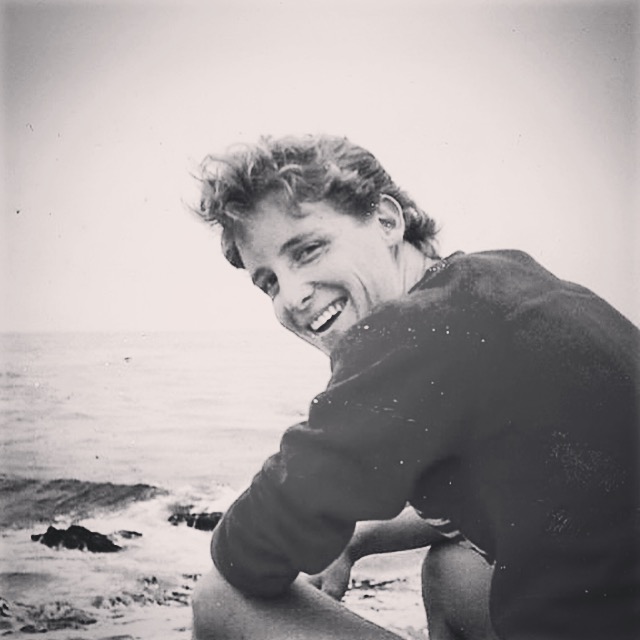
Patrick Ranahan: "Before our world came undone."
I run a small support group for family members. The following are random comments from
one of our meetings. Perhaps you'll identify with some of them. While trying to help our loved ones, we need help ourselves. (Excerpt from my memoir with permissions.)

Photo Credit: MSJWatson83
Flickr
“My child says she’s fine. She won’t see a doctor. She’s forty-five. I can’t make her go. We’re running out of money to assist her.”
“If we turn him out, he’ll be on the street. I can’t live with that.”
“My sister has no boundaries. She’ll tell anyone anything. She’ll tell her social security number if they ask.”
“I’ve lost my other children. They don’t want to be around the chaos.”
“I have one child. I don’t have the experience of a well child.”
“My ill son is living with us. It’s very difficult. I’ve just been through surgery and chemo for ovarian cancer. My husband is developing dementia. I have no support.”
“My daughter got a traffic ticket for reckless driving. They fined her and sentenced her to eighty hours of community service. She doesn’t have the capacity to follow through and find an organization that will let her volunteer for them.”
“I read something that resonated with me. ‘A mother is as happy as her unhappiest child.’”
“My daughter’s illness is fracturing the entire family.”
“It seems like this illness is very self-centered. Everything's about me.”
“I can’t talk about these things anywhere else. People don’t understand.”
"It's such a relief to know I'm not the only one in this kind of situation."
I was contacted recently by a local newspaper. Last week they published the article below (posted here with a couple of my corrections) along with a photo of me from the blog. NOTE: Instead of this article in a newspaper, I'd rather have my son back. Pat was a sensitive, kind, friendly man with an incisive sense of humor. He wanted, more than anything, not to have bipolar disorder and to live a long life. I miss him.
BLOGGING ABOUT MENTAL ILLNESS TO HELP FAMILIES
by Carol Feineman, Editor
Dede Ranahan wants other parents and their families dealing with mental illness to learn from her son’s tragic death three years ago. Her son, Pat, died in 2014 while in a hospital psychiatric ward, from either cardiac arrest or a seizure. Pat, who was 45, dealt with bipolar disorder since his childhood.
Ranahan, a Lincoln resident, started a blog in July in which she invites the public to add their stories about dealing with their loved one’s mental illnesses. The blog, “Sooner than tomorrow, A Safe Place to Talk About Mental Illness in Our Families,” can be found at soonerthantomorrow.com. It is also the name of Ranahan’s 94,000-word manuscript, “Sooner Than Tomorrow, A Mother’s Memoir.”
“It’s my story and my son’s story, but in a way, it’s every mother’s/child’s story living with mental illness,” Ranahan said.
Approximately one in every five adults in the United States, or 43.8 million or 18.5 percent, will have a mental health condition in a given year, according to NAMI (National Alliance on Mental Illness).
“Everyone is susceptible. Also, just because someone may have been brain healthy for 15, 20, 25 years doesn't mean the switch cannot be flipped,” said David Bain, executive director of NAMI Sacramento. “Most people are fine until they hit their late teens or early 20s before their condition manifests. But I've talked to people who get sick after 30.”
Ranahan started her blog this summer as a forum for other parents to share their stories. “I work on the blog four days a week, either writing, researching, or communicating with others. Some of these stories weigh heavily on me so on Fridays,” Ranahan said, “I post a beautiful photo or a happy photo to brighten things up.” Today, over 2900 viewers throughout the country have visited the blog, according to Ranahan.
NAMI (National Alliance on Mental Illness) emphasizes that outside support and encouragement is critical for everyone in the family, not only the person with the mental health condition. “Family members need to be informed and educated on the realities of their loved ones condition. That's what organizations like NAMI do best. We have classes family members can take,” said NAMI Sacramento’s Bain. “Support groups are another vital tool for family members. Not only will they learn things to help their loved ones but to help themselves too. Often, family members give all of themselves until they burn out. No one wants to see that happen. So we caution people to take care of themselves so they can better take care of others.”
Since early 2013, Ranahan has also led a support group at 2 p.m. the second Friday of the month at the Raley’s conference room in Lincoln. The support group’s purpose is to provide a place for parents and grandparents dealing with adult children coping with serious mental health issues “to vent and breathe and let it out,” according to Ranahan.
“Some family members are trying to help loved ones who are living with them. Some of their loved ones are homeless and some are in jail for different reasons. It’s all over the map,” Ranahan said. “It’s very stressful for the other members of the family — parents, siblings, grandparents. Everyone’s in crisis and they’re not clear what to do. They’re in some kind of chaos. We’re there in the support group to say, 'We get it. We understand what you're going through.'"
Monthly support group participation varies. “New people come, others come back. There’s a need. There are other things like NAMI affiliates where people can go. They’re more formal but our group is less structured,” Ranahan said. While the Lincoln Hills Foundation donated a $1,000 for the support group to buy coping and healthcare guide books, the support group is open to all Lincoln-area residents.
Pat Ranahan didn’t want his mother to talk about his mental illness. Since he’s no longer here, Ranahan is blogging and leading the support group to help others deal with mental health issues. “Since my son passed, I feel that the handcuffs are taken off and I can advocate more freely. Pat didn’t want people to know about his illness because he was afraid of the stigma,” Ranahan said. “He was afraid that he wouldn’t get a job, girlfriends, or good housing. He was embarrassed. It’s our Catch-22. By keeping our stories secret, we don’t gain understanding and support from the broader public.”

Dede Ranahan in The Lincoln News Messenger
Thank you Carol Feineman and Lincoln News Messenger.
To read article online go to http://www.lincolnnewsmessenger.com/article/1/11/17/blogging-about-mental-illness-help-families

Photo Credit: Marisa Farnsworth
Winter's artistry.
Hope you have a good weekend everybody!
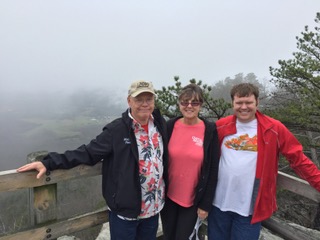
Gilbert, Beverly, and John Anderson on a mountain in North Carolina.
My wife (Beverly) and I are the parents of a 37-year-old man who has disorganized schizophrenia. John was always different. He was quiet and reserved. He didn’t talk much, and never seemed to be very happy.
After barely graduating from high school in 1998, John started trade school but dropped out after a few weeks. So we helped him get a job and start working. He couldn't hold a job due to his inability to focus on tasks. He was either fired or asked to resign several times.
Once John was out of school, he got into more and more bizarre behavior. He started hearing voices, would get agitated, and even a little violent. This was quite scary, as John is a big man – 220 pounds or so. Beverly got him started seeing a therapist in 2000. It was then he was first diagnosed with schizophrenia, and was put on medication. His doctors had a hard time getting him on the best medication.
He's been a patient in mental hospitals several times. Each time the doctors had to adjust his medications to get the illness under control.
John has tried living away from us several times. None of these worked out. John is a very messy person and tends to tear things up a lot. For the last eight years, John has lived with us in our home. It’s not what we would have planned for our “senior” years, but we've accepted that we have to take care of him for as long as we’re able.
All of this has been an emotional struggle for Beverly and me. For most of the time since John got out of school, we have had some resentment for him.
But then we took NAMI’s “Family to Family” training. This is a 12-session course, meeting once per week. We received education about mental illnesses from people who were parents of mentally ill people. One of our instructors had actually been shot by her mentally ill daughter! We also met and shared experiences with other people who have mentally ill loved ones. We came away with a much deeper understanding and appreciation of John’s illness. We were able to reduce our frustration with John, and the guilt that we had about feeling the way we did.
We are now able to see more clearly what a blessing it is to have John. We both have some physical challenges. Beverly's had four joint replacements. I've had neck and back surgeries. We’re limited in range of motion and what we can lift. John’s brute strength is very helpful to us around the house.
John has been an excellent caregiver for us when we were recovering from surgeries. He is as kind and good-hearted as any person I know. My last back surgery did not go as well as expected. I had difficulty walking for about six weeks. Every day while I was down, John was bringing my breakfast to my bed promptly at 7:30 AM.
John is also very good with his brother’s daughters (ages 7 and 3). He's very kind and protective of them. These little girls really love him, I think because they can sense his love and care for them.
When I think about him now, I feel great empathy. He is a really good man and a wonderful person who is just so limited by his illness.

Photo Credit: Hernan Pinera
Flickr
I started out life with a case of attention deficit disorder. I was always different from most of the kids in school. I ended up with good grades and participated in sports and such. Every day was a struggle, though, wondering why I wasn't like the rest of the kids.
As an adult things seemed fine — married, two children, a home, a life! One day it all came crashing down. Suicide attempt. No husband. Kids live with my mom and dad. I'm homeless and wondering who turned on the spin cycle?
Many years and medications later, I decided I couldn't take another pill, another counselor, or another psychologist staring at me and not saying a word. I've not taken one pill or seen one professional until a week ago.
In the last seven months, I've become aware of my new husband's infidelity and have heard many promises of change. I've been diagnosed with Multiple Sclerosis and he with Parkinson's disease. I no longer feel stable. Depression's grabbed hold of me, anxiety flows through my veins, insomnia's my best friend, and I just want someone to turn off the damn spin cycle.
I didn't choose for these things to go wrong in my life. I've made stupid decisions and suffered the consequences, but I'm not my disease and it doesn't define me. I have an illness that I've finally decided to conquer with another intake at a mental health center, and most likely medications to combat these ever exhausting symptoms of life in the fast lane courtesy of messed up genes.
I'm still optimistic that I'll succeed in life and in the things I want to do. For now, I'll just keep pushing through this mess I call living with hopes to come out the other side of the tunnel full of new found harmony.