Well, hello. Love this face.
Have a good weekend everybody.
Your Custom Text Here

Photo Credit: Marisa Farnsworth
Well, hello. Love this face.
Have a good weekend everybody.

Photo Credit: Marisa Farnsworth
My son, Pat, had a serious mental illness but that didn't stop him from being a caring friend. Always short on money, he found creative ways to be a thoughtful gift giver. One fall he sent a box of New England leaves to a friend living on the West Coast who was homesick for seasonal color. Friend and poet, Gary Thompson dedicated the following poem to Pat. It appeared in Gary's book, On John Muir's Trail, Bear Star Press 1999. I found the poem among Pat's few possessions after he died. Thank you, Gary.
FROM CALIFORNIA
Your package of east coast
autumn leaves arrived
just as my life
needed connection to the seasonal
reds of my earliest falls
in Michigan.
I confess, young migratory friend,
the western dogwood beside my porch
is a stunning welcome
flame,
but I miss the maples more
each November spent
here where mostly oafish yellow big leaf
and vine imitations
drop their uninspired leaves.
I like to say maple,
my grandpa's eastern kind: mountain, silver,
red, and best of all -- the sugar
he coddled as a seedling
and loved until the budless spring
he died. Later, in forbidden Snow
Woods, I gathered red leaves
in my lunch box, afterlives
I spirited home
in the childhood dusk.
Your airmailed leaves spill
from a basket on my desk; my thoughts
blow east. I'll send
along a single heart-
shaped California
redbud leaf I've kept around
to ignite a day,
a fragile western find I found
might make me cry.
For Patrick Ranahan
CNN aired This Life With Lisa Ling Sunday, September 25, 2016 - "Welcome to America's Largest Jail." Teresa Pasquini's (See post Teresa and Danny) reaction follows:

Photo Credit: Teresa Pasquini
I forced myself to watch this last night even though I knew it would hurt. My day had started with my daily phone call from Danny. When he calls the message states, "You are receiving a call from an inmate at Napa Department of Corrections." I always hate hearing that but then I accept the call and hear my boy's sweet voice and know that I have to pull it together and give Danny the best 10 minutes of his day. Hearing his voice is always one of the best parts of my day. But, it hurts.
So, last night when I watched this segment inside the LA County jail system Danny was with me but many others were, too. My brother had once been arrested during a psychotic break in LA. I forget how we even knew he was there but I remember that both he and Danny were in crisis at the same time. I remember reaching out to the Contra Costa County Conservator who had helped me with Danny. He helped my elderly parents navigate the jail system in LA. He got him out of there and back home and into a hospital, thank God! He was a partner in care who I will always remember.
As I heard about the description of the "exploding mental health population" inside of the LA County jail system, I thought of my own county jail here in Contra Costa whose mental health population has also exploded. I thought of the staff I have come to respect so deeply here in my own county being exposed to the conditions described in this segment like gassing, assaults and the crumbling infrastructure. I thought of the safety and sanity of my partners in care, both law enforcement and health. I thought about how they too must continuously balance "constitutional rights and employee safety" and public safety. It is such a chaotic dance that I have come to know too well.
But what hurt the most watching this segment, was the description of the mental health inmates being "chained to tables" and the casual comment that "we don't have the mental health facility in California right now..." that would provide the right care. I was screaming at the TV that California should have those facilities. We have the money from Prop 63/MHSA. Or, we had the money but where did it all go? Nobody knows according to the State Auditor, State Finance Department and Little Hoover Commission reports and audits. And now, there is a 60% increase in the jail mental health population.
So, please remember that while California spends millions of mental health dollars on coloring books, yoga, hip/hop car washes and fluff, we CHAIN people with serious mental illnesses to tables. They are tortured by seclusion and inhumanity because we designed it this way and too few want to call it out. We ALL have to start calling it out...everywhere, everyday, every way.
This segment should be required viewing for every MHSA Stakeholder group in CA and every county Supervisor who approves their county mental health budget. It should also be shown to every state legislator, Diana Dooley, California's Secretary of Health and Human Services and Governor Brown. Oh, and the U.S. Senate should be required to watch it before they leave on their "extended break." It is time to #PassHR2646 in the Senate and #GetReal63MHSA in CA.
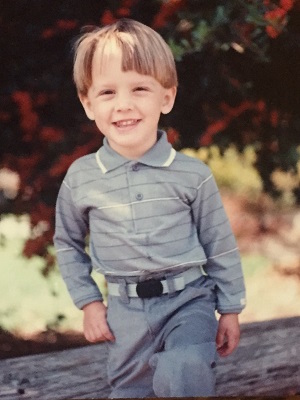
Photo Credit: Teresa Pasquini

Photo Credit: Dede Ranahan
On good days and not-so-good days, my kitty cat does something that makes me laugh.
Pets are the best!
Have a good weekend everyone.

Photo Credit: Gianluca Ciacci, Flickr.com
Sometimes I need to see another face, in person, and give and receive real hugs. Three-and-a-half years ago I put an ad in the hometown newspaper about starting a support group for family members of people struggling with mental illness. I had no idea if anyone would respond. Twenty-two people showed up at my house for the first meeting. At the second meeting, we worked together to establish meeting guidelines:
1. Start meetings on time.
2. Come to support and be supported.
3. Maintain group confidentiality.
4. Listen without judgment.
5. Time-limit personal comments in order to give everyone a chance to speak.
6. Foster a positive approach. Focus on successes.
7. Share resource information.
8. Realize diverse opinions will be expressed. This is good and means we're thinking.
9. Maintain flexibility to meet the needs of the group at each meeting.
10. Add humor whenever possible and appropriate.
As group moderator, I promised I'd always be present (unless sick or out of town) no matter what. Everyone needed to know our meetings would take place without fail even if only two or three were in attendance.
We found a meeting site at the local Raley's supermarket. The store makes its conference room available to groups to use free of charge. It offers anonymity and keeps things simple. We don't provide food and people bring their own drinks. Most bring water bottles. Meetings last about an hour and a half, or until everyone's had a chance to say what they came to say.
Lately, I've wondered if we should continue. People come and go. Some come only once, some come when they're in crisis, and a few come to every meeting. Just when I think maybe the group's run its course, a new person shows up and is so grateful to find us there for them.
So, we'll keep going until we get a sign that it's time to fold our tent and call it a day. It's only an hour and a half out of the month and if it makes a difference to even one person in a month, that's still one person. It reminds me of the starfish story:
A young man is walking along the ocean and sees a beach on which thousands and thousands of starfish have washed ashore. Further along he sees an old man, walking slowly and stooping often, picking up one starfish after another and tossing each one gently into the ocean.
"Why are you throwing starfish into the ocean?" he asks.
"Because the sun is up and the tide is going out and if I don't throw them further in they will die."
"But, old man, don't you realize there are miles and miles of beach and starfish all along it! You can't possibly save them all, you can't even save one-tenth of them. In fact, even if you work all day, your efforts won't make any difference at all."
The old man listened calmly and then bent down to pick up another starfish and threw it into the sea. "It made a difference to that one."
Adapted from The Star Thrower by Loren Eiseley.
When in the midst of chaos and sadness caused by mental illness, I try to take note of beauty, goodness, and fun things. I don't always succeed. (Honestly, this effort sometimes feels impossible depending on what's going down.) But when I do take notice, it lifts my spirits, even if only for a few minutes.
Have a good weekend.

Cement Company, Granville Island, Vancouver, Canada
Photo Credit: Dede Ranahan

Photo Credit: Lieven SOETE Flickr.com
A STORY FROM A BLOG READER:
The year was 1959 and I was sitting at the kitchen table eating toast with jelly (one of my favorites for breakfast).
"Take the baby, hold the baby, keep the baby."
"Take the baby, hold the baby, keep the baby."
By the third time, I looked up and knew that something was terribly wrong with my mother. I was seven years old and had no idea that my life was about to change forever. My grandmother did take the baby (my brother) from my mother while my dad and young uncle quickly moved mom into my parent's bedroom.
I was so scared but managed to slowly walk from the table to my parent's room to see what was happening. My mother was on the bed, and when she saw me, she told me to come in. I walked in and got on the bed but soon found myself gasping for air. My mother was holding me so tightly that I couldn't breathe. It took both my father and my uncle to pry me away. The next thing I remember is being upstairs at the neighbor's and watching from the window as my mother was loaded into a large, black ambulance.
Today, in my 60's, I look back on my childhood and wonder how I and my siblings managed to survive. My mother was finally diagnosed as manic depressive now known as bipolar disorder, but this was after many, many years of manic episodes and many long (seemed like forever to us) stays at the mental hospital.

Jasper, Alberta, Canada
Photo by Dede Ranahan
ANOSOGNOSIA -- #1 ENEMY by GG Burns
I echo every word you wrote, Dede. It seems that I have more friends of children who have suffered with a brain disease and are now free, (passed), than I do with those who have figured out a way to recover.
My son has "suffered" for most of his life. Nothing was easy for him (or us — his family), even though he was bright and full of life and joy until his brain illness took over. We tried everything. Twelve long years of IEP special accommodations in the school system; special diets, special vacations; (with as little stimuli as possible); special cocktails of meds; (some worked, some made him worse while others were like a miracle cure). For a while, in his late teens, the future looked good. He was adjusting and transforming into a responsible young man with enormous dreams.
Yet, as my son grew older, his desire to be normal, to be free of the labels and the "special world" we'd built for him became the enemy. He broke away from his life of special accommodations like an animal in chains. Once he was free of his chemical straight jacket, he refused to return. He was higher than a man on cocaine. The mania and impulsive reckless life was what he wanted. In his world, he was king! He could now do anything and there were no rules or consequences. And even when his recklessness and abandonment met handcuffs, locked doors and bars, he didn't seem to notice because it forced him to sink deeper into a total psychotic break from reality.
Overtime, as my son's illness rapidly progressed, my own health declined. For almost 11 years I have battled PTSD, anxiety, and painful autoimmune diseases. My son is trapped in a place that is worse than death -- the carousel of insanity, the revolving door that leads nowhere. It just keeps him from killing someone and then spits him back out to the streets ... untreated!
We’d never treat a human being with Alzheimer’s this way, but yet, the USA abandons the sickest people in their country everyday to live in homeless shelters. The senseless system of “self-directed care” -- a recovery bullshit model developed for addicts not for people with serious brain damage -- forces people who are at their worst to hate their own parents! It keeps us from communicating with their medical providers even when they are hospitalized! Their medical providers are trained to tell our sons/daughters that we were the ones who made them sick! It’s worse than death for many of us.
The more I try to help my son, the more determined he is to refuse treatment that would restore his sanity. He sadistically and verbally abuses me and there is simply no way to have a conversation or to even meet in person. He calls and texts with extreme threats to end my life. I, in turn, go through extraordinary measures to have him committed and the state hospital kicks him out in less than 3 days. In this crazy “NO-CARE” world we live in, it is all about his rights to refuse. I lay in bed at night wondering when will this ticking time bomb finally blow? I ask myself how many people will blame me for his death or blame him for mine?
My son is constantly angry about everything that he has not been able to do in his short life.
He blames his parents!
He blames the banks!
He blames doctors who diagnosed him years ago!
He blames the government!
He blames the hundreds of mental health providers who have "attempted" to provide him some small level of care in spite of the fact he doesn't believe he has an illness.
In my mind, my son's "anosognosia" (lack of awareness to ones symptoms) will always be the #1 enemy. We have gone to war with this debilitating symptom, making it a household name in our attempts to lobby for state/national parity and system changes that would "require" someone like my son to agree to treatment in spite of the fact they don't believe they are ill.
Until our civil liberty laws change, my son’s brain will continue to deteriorate! It is a costly, unjust and inhumane way to die! Brain disease and cancer are both treatable. Some recover, some don't. The difference is that patients with cancer usually realize they have an illness.
You ask how do I find joy? My faith and earth angels (friends who understand) help me realize I must take care of myself in order to be there for my son -- even from a distance. I find comfort in painting, gardening and supporting others. I fight with ever determined ounce of life I have for legal policy changes that might breathe a longer life into my son and others like him before it is too late. I rest when I can. I pray. I weep.
I am a Mother of a gifted young man who is surviving a serious brain disease called schizophrenia in a world that allows him to die a slow painful death -- untreated.

Moraine Lake, Alberta, Canada
Photo by Dede Ranahan
I've been in Canada for twelve days. I departed from home on August 25th, the day before what would have been my son's forty-eighth birthday. Since Pat died, unexpectedly, on a psych ward two years ago, it's been difficult to maintain my equilibrium. In Canada, I wanted to be in nature. I hoped to find some solace, some connection to my deceased son. I seem to "see" him outside -- in sunsets, in moonlight, in trees and flowers. In the wind.
I miss Pat, of course. I'm still grieving. The part that concerns me about myself, however, is something else. My anger. Why did my son have to have such a difficult, shitty life? Why did he die when he wanted to live? Why did both of us try so hard for so long to fight a such a formidable foe? Why are loving moms and dads often considered the "enemy" by our mental health system? Why is mental illness and our understanding and treatment of it still in the dark ages?
In the support group I run for families, one of the mothers mentioned a quote that goes something like, "A mother is as happy as her unhappiest child." When Pat was alive, my happiness was often impacted by his illness. When he was doing well, I was doing well. When he was suffering -- and let's be honest here, we really are talking about suffering -- I found keeping my own balance challenging. How could I be grateful for all the good things in my life -- my three wonderful daughters, my grandchildren, my friends, and every other blessing when one of my offspring was in serious trouble?
I know it's not just me. I see how other mothers and grandmothers in our support group suffer along with their ill children and grandchildren. If you haven't walked in our shoes, there's no way you can get this. It's like walking around with a hole in your heart. All the time. Everyday.
Pat's ashes are in my living room high on a shelf where he can watch family gatherings. He always wanted to be home and now he is. He loved his red electric guitar and his urn -- it's really a handsome black box -- has a three dimensional electric red guitar on it. The inscription reads, "Pat, You are the Music." When the time comes, my ashes will join his.
Meanwhile, I'm back. The Canadian lakes -- Moraine, Louise, Emerald, Peyto, and Bow -- and mountains I visited were varied and stunning. I walked on Athabasca Glacier at Columbia Ice Fields. I descended to underground hot springs and rode a gondola high above Banff. I saw my son everywhere. I hope he saw me. And Megan, Marisa, and Kerry I thought of you, too. I love you lots.
If you've discovered ways to keep joy in your life when you're in the thick of the battle with mental illness, please share your ideas and comment below.
Hope you're having a good week.

Photo Credit: Vincenzo Utro Fickr.com
Continued from Parts One and Two and excerpted from a magazine article I wrote in 2001. It's too late for my son, but they were good ideas then. And they are good ideas now.
PART THREE
Since March 2000 the symposium steering committee has continued to meet monthly. Some of the ideas currently under discussion include the following:
Some days I'm confident that support for these ideas will come. Other days, I wonder if I'm leading a charge that will result in a huge public falling on my face. It's a risk I have to take. The opportunity is too great. If I fail, it will still all have been worthwhile. The good that has already occurred because of the symposium cannot be erased. I've received dozens of notes of appreciation from symposium planners, participants, and attendees.
Meanwhile, some see the mental health system itself as not well if you use the definition of illness as fragmentation. Departments are siloed with little coordination between them. Communication between agencies needs improvement. Human service personnel are in a supply and demand crisis, and public awareness and education cries out for substantial increase.
Concerned mental health proponents -- and there are many within the pubic and private mental health community -- are beginning to talk about the need for more unification of efforts, more wellness or integration. As it attempts to integrate itself, it's time for the mental health community to bring state educational systems into its fold.
On the home front, Merlin the Magician sits on my desk. Our family has begun to integrate mental illness into our familial system in a hard-fought battle to find wellness. My son, still seeking integration of illness and wellness, has fled to a foreign country.
Will I ever see him again? I don't know. I have to trust that Merlin's magic will keep him safe and, when he's ready, bring him home once more.